New Year, New Adventure: Part 12 of 13
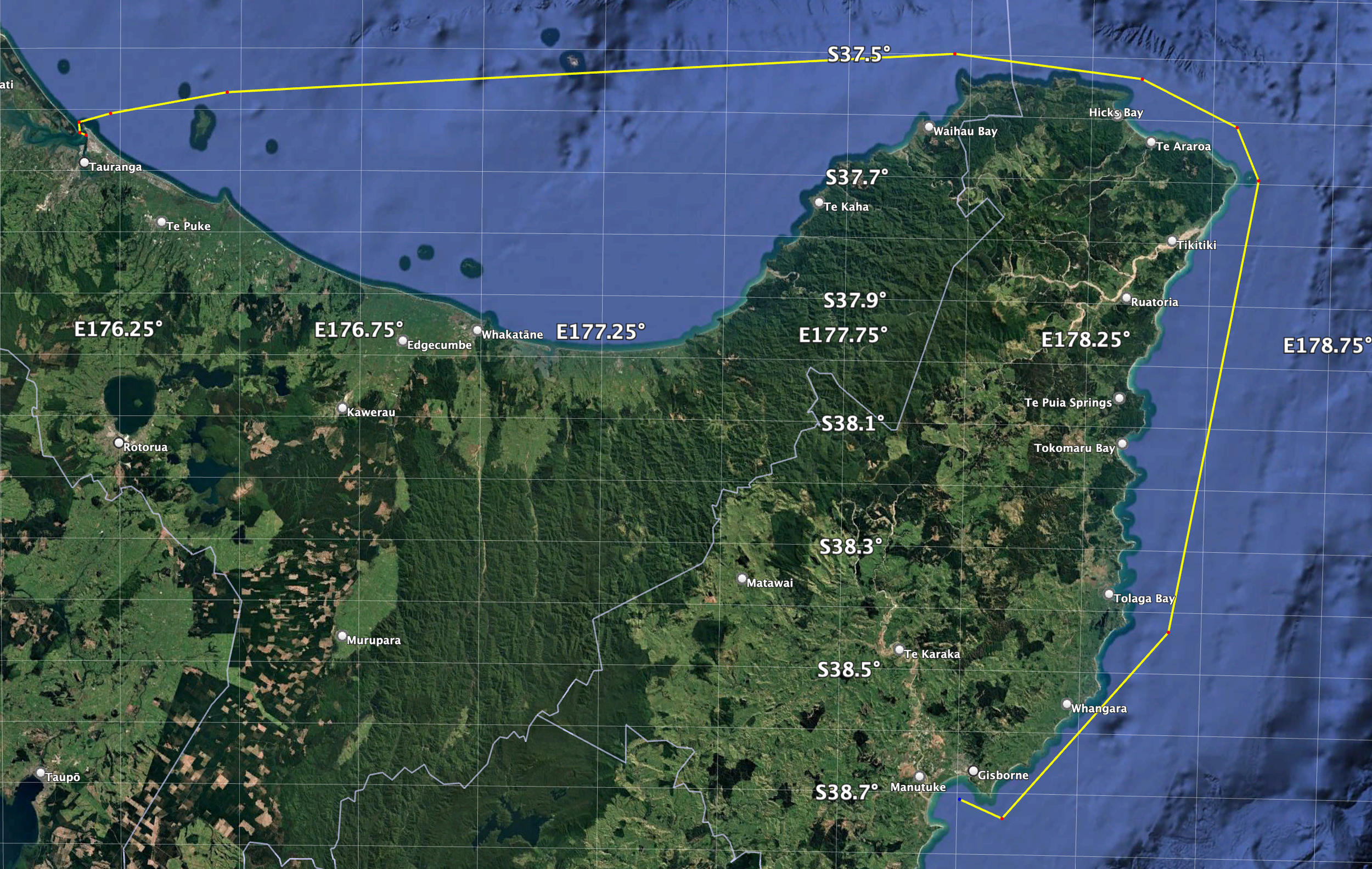
On the west end of the Bay of Plenty lies the beautiful natural harbor of Tauranga, the next stop on the ship’s itinerary. For background, the Maori arrived in the 13th Century, settling the general area. Europeans showed up in 1826. It was not well received by the Maori, and the British fought a low intensity conflict in the area through the 1860s.
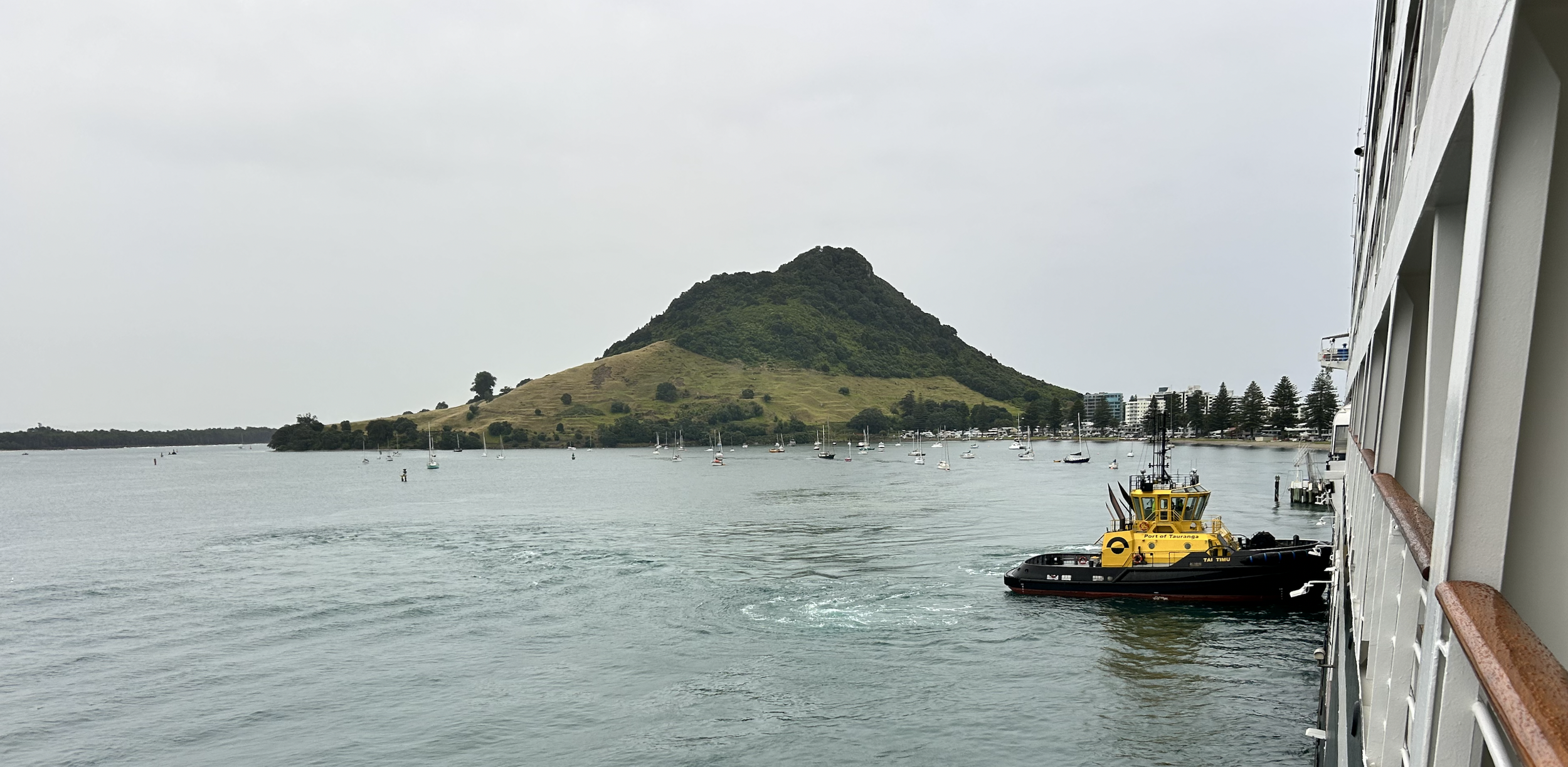
The most significant feature of the harbor is Mauao, a three million year old lava dome owned and managed by the Maori as a sacred location. It is open to the public and if you are feeling energetic, there is a trail around the base and up to the peak.
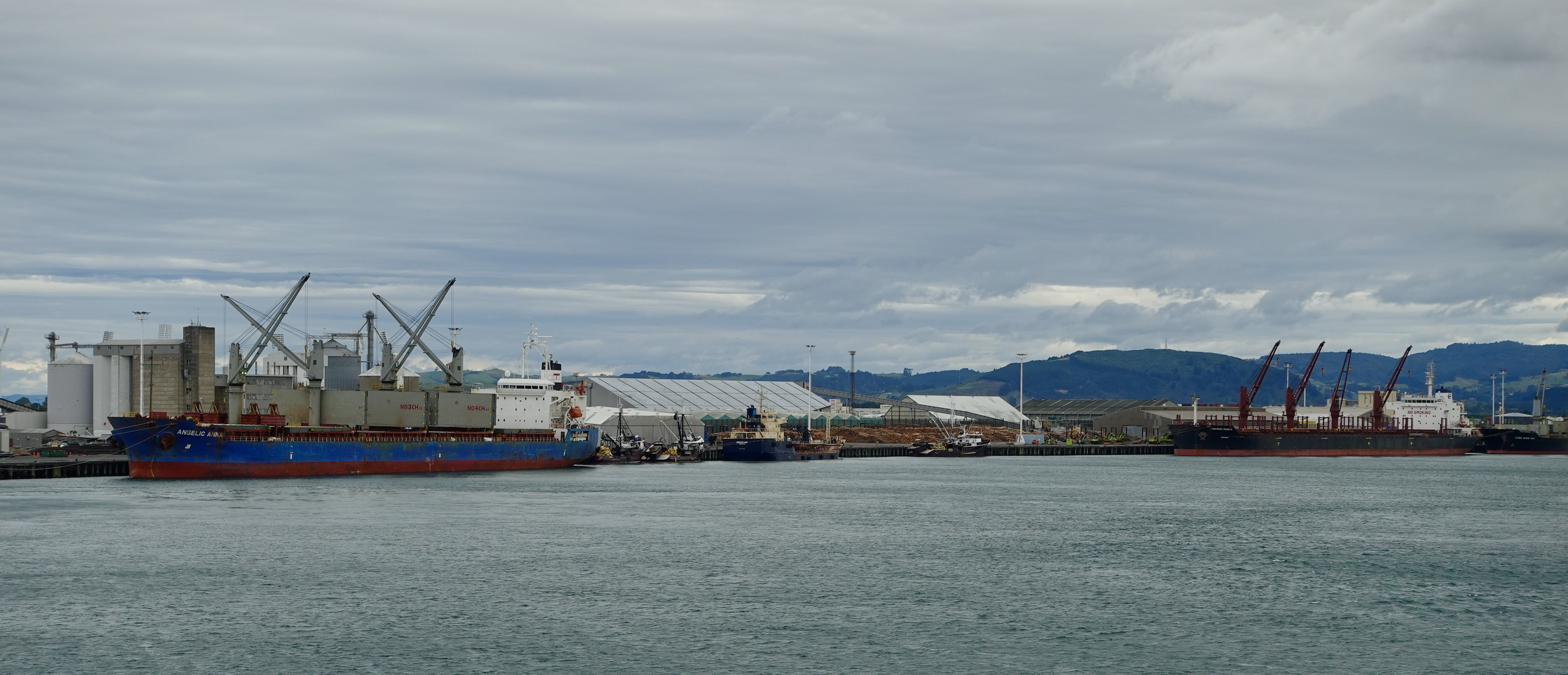
In addition to beaches, beautiful terrain and being the fifth biggest city in the country, Tauranga is the biggest and busiest port in New Zealand.
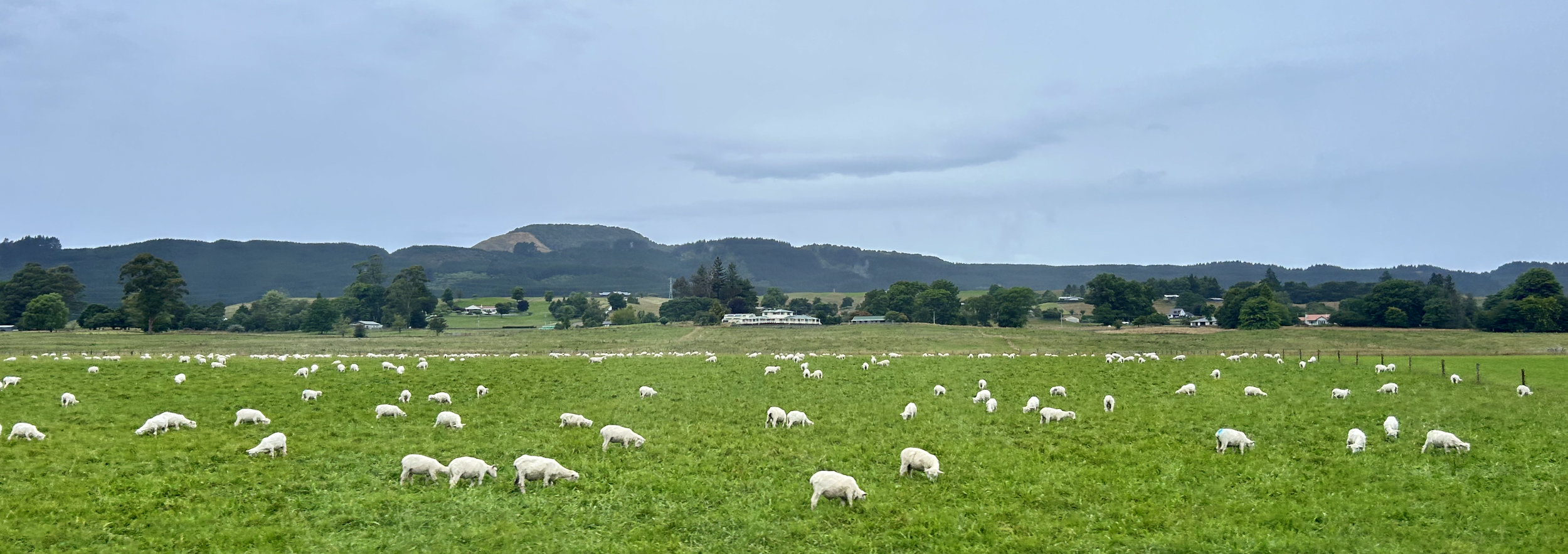
The day’s excursion to Rotorua was a fair distance away through some agricultural areas. Living up to its reputation, New Zealand had lots of sheep.
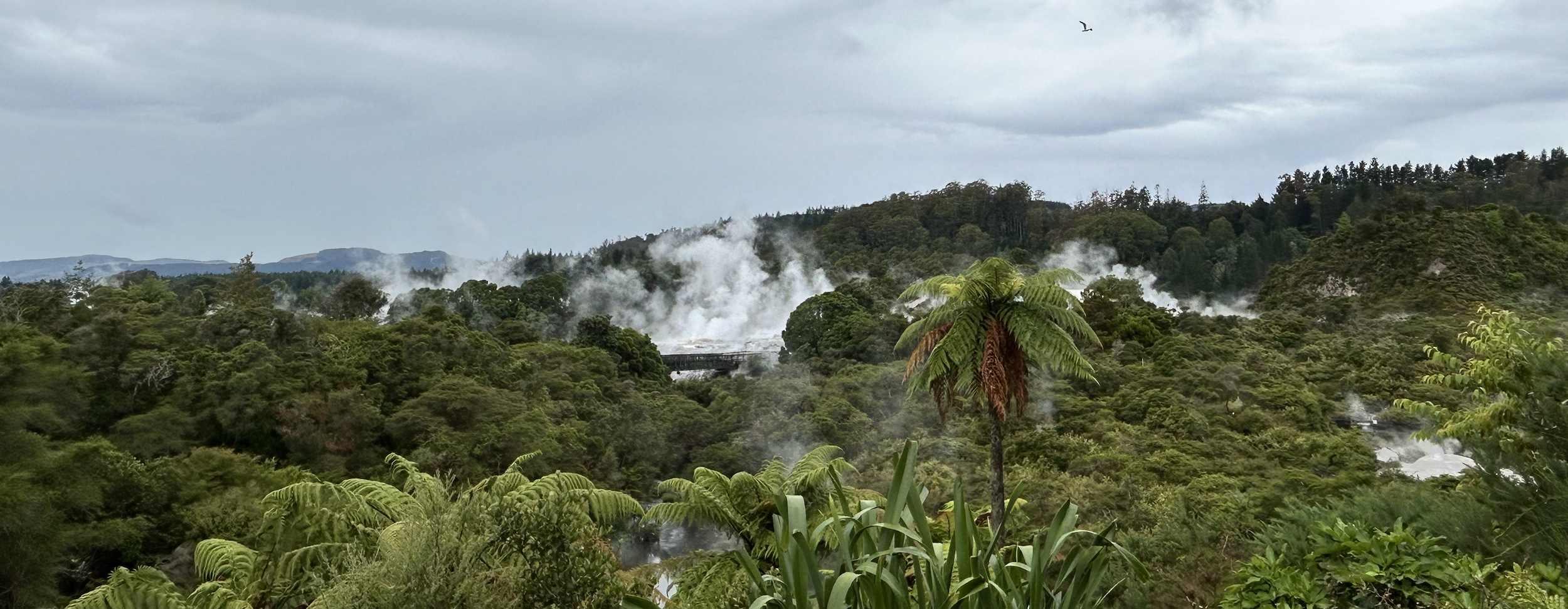
Up in the hills, past Lakes Rotorua and Rotoiti, we arrived at Whakarewarewa Thermal Reserve and Te Puia, the Maori Arts and Crafts Institute. The cultural center was fantastic and mostly as expected. The geysers were very cool, too. A small version of Yellowstone, except with tropical folliage.
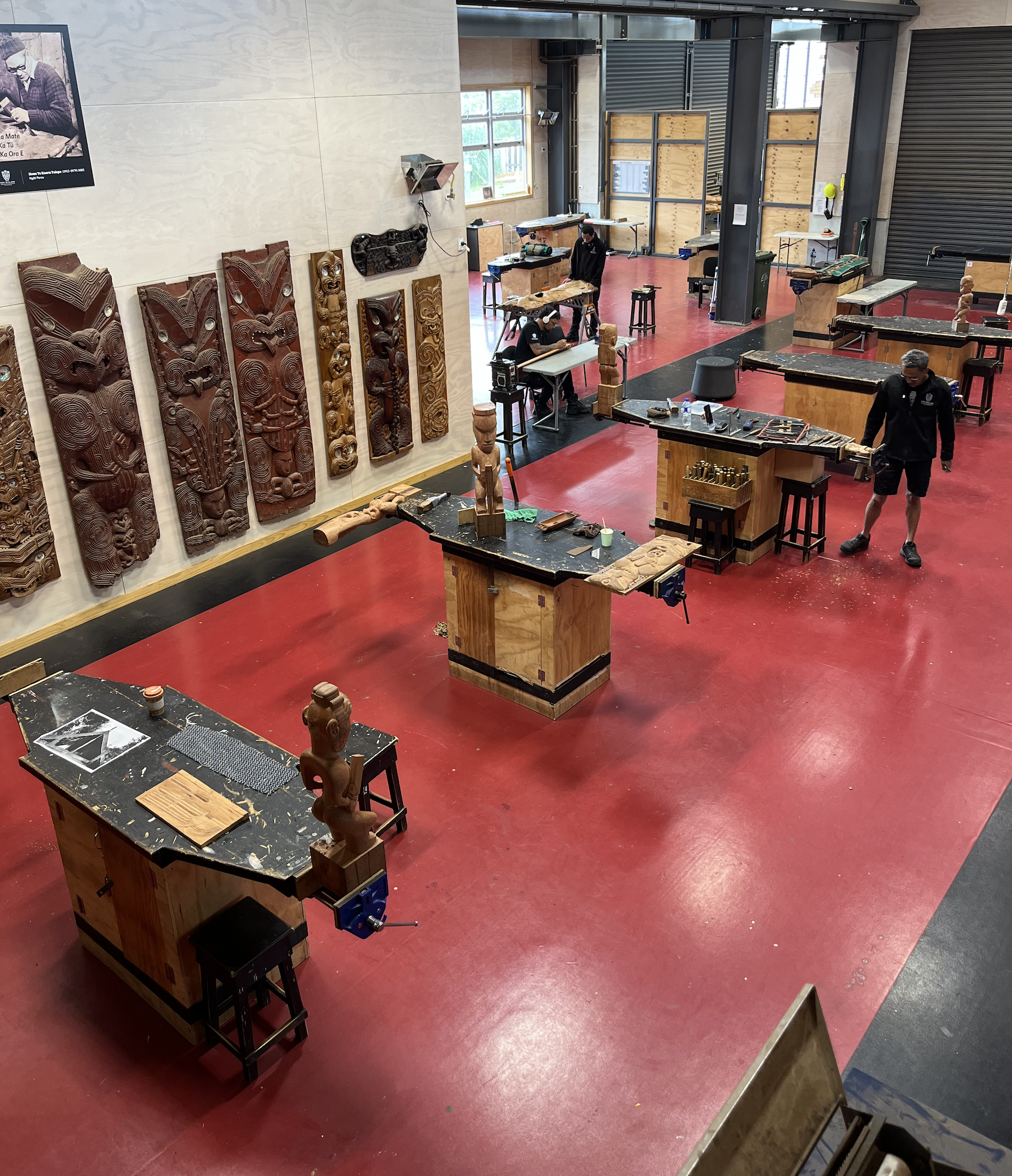
The Te Puia staff provides training to young people in the traditional Maori arts and crafts. Weaving, wood, bone and stone carving in addition to various other skills.
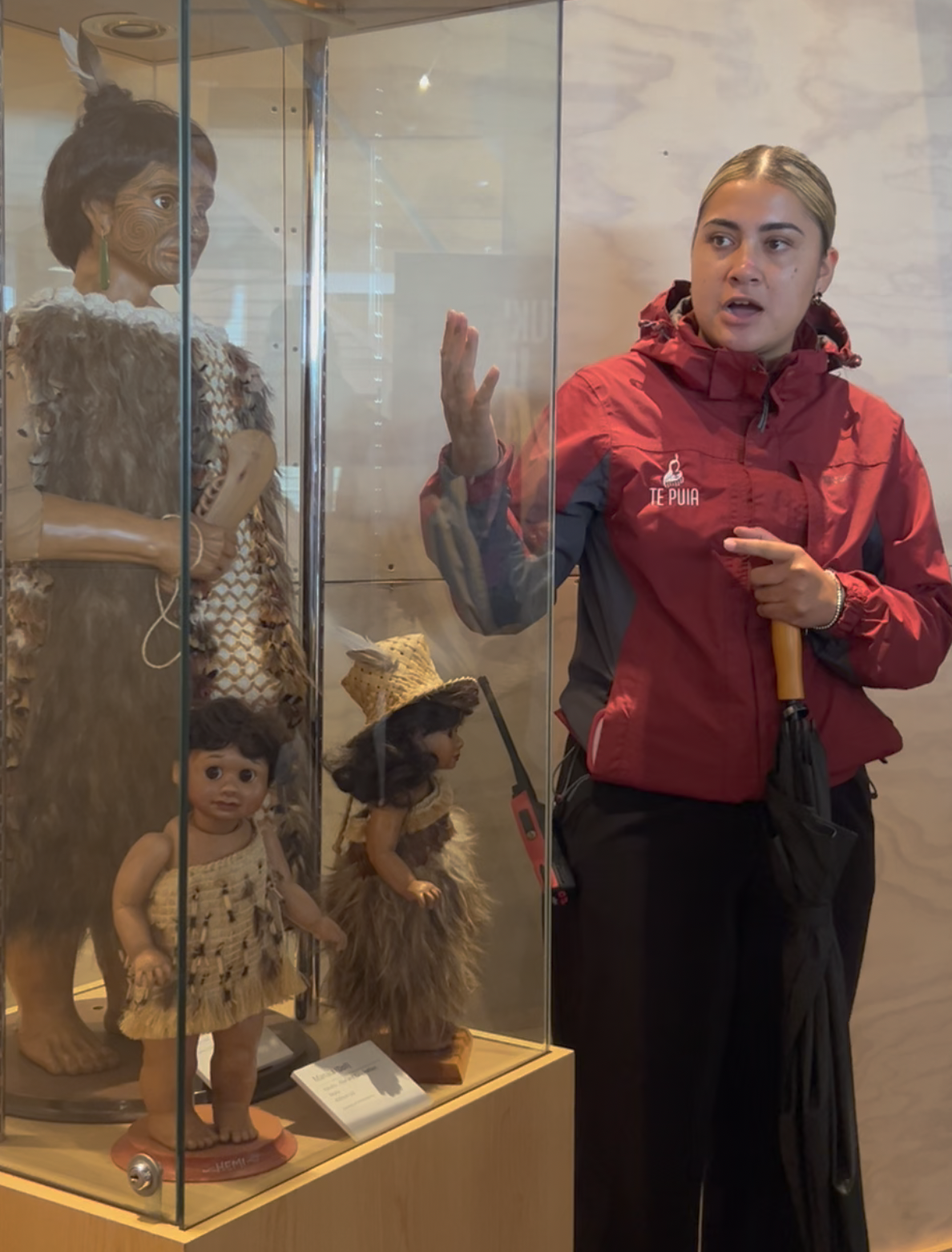
Our tour was extensive and educational. We observed carving and flax making and weaving. The flax fabric was impresive in its soft yet durable quality.
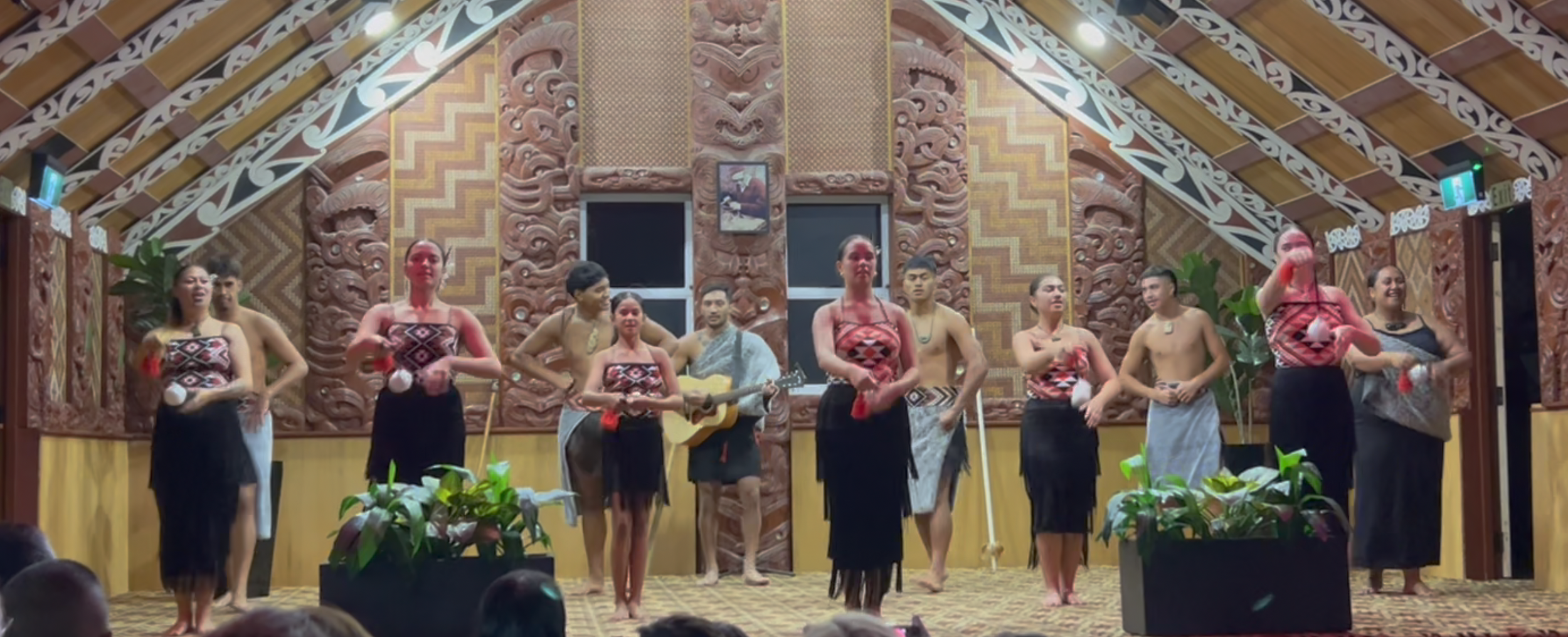
In addition to the crafts, we learned about Maori performance art, including singing, dancing, and the Haka.
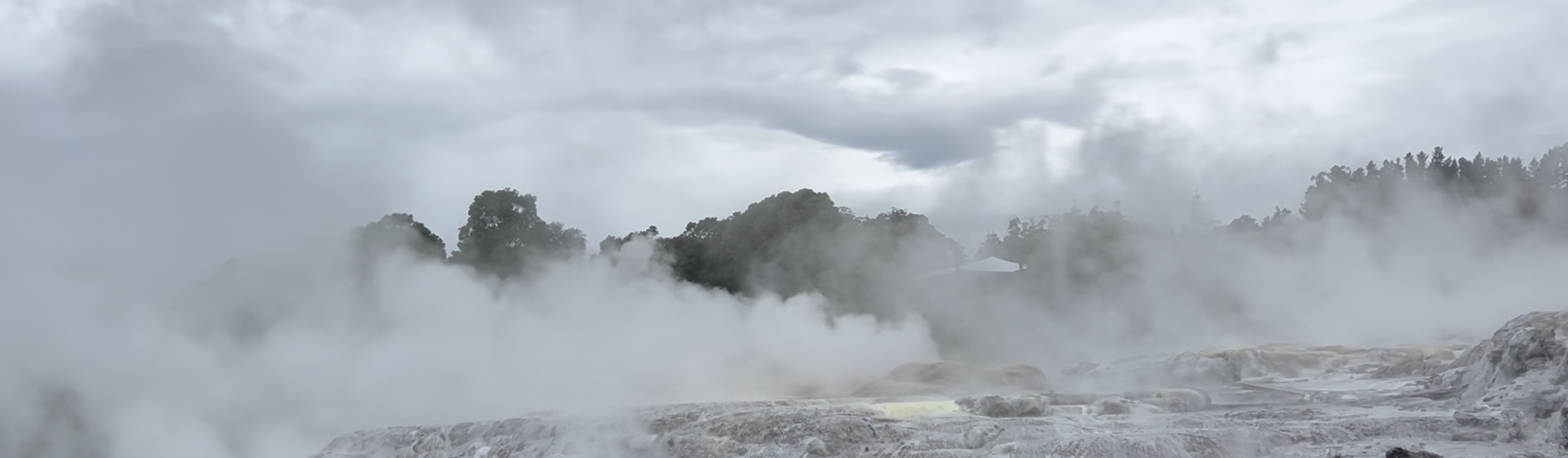
After we took in the amazing Maori traditions, we were able to view kiwi birds in a nocturnal display (sorry no photos) and then wander down to the thermal vents. The Whakarewarewa area has 500 pools and 65 geyser vents. The Maori settled the area around 1325, taking advantage of the hot water.
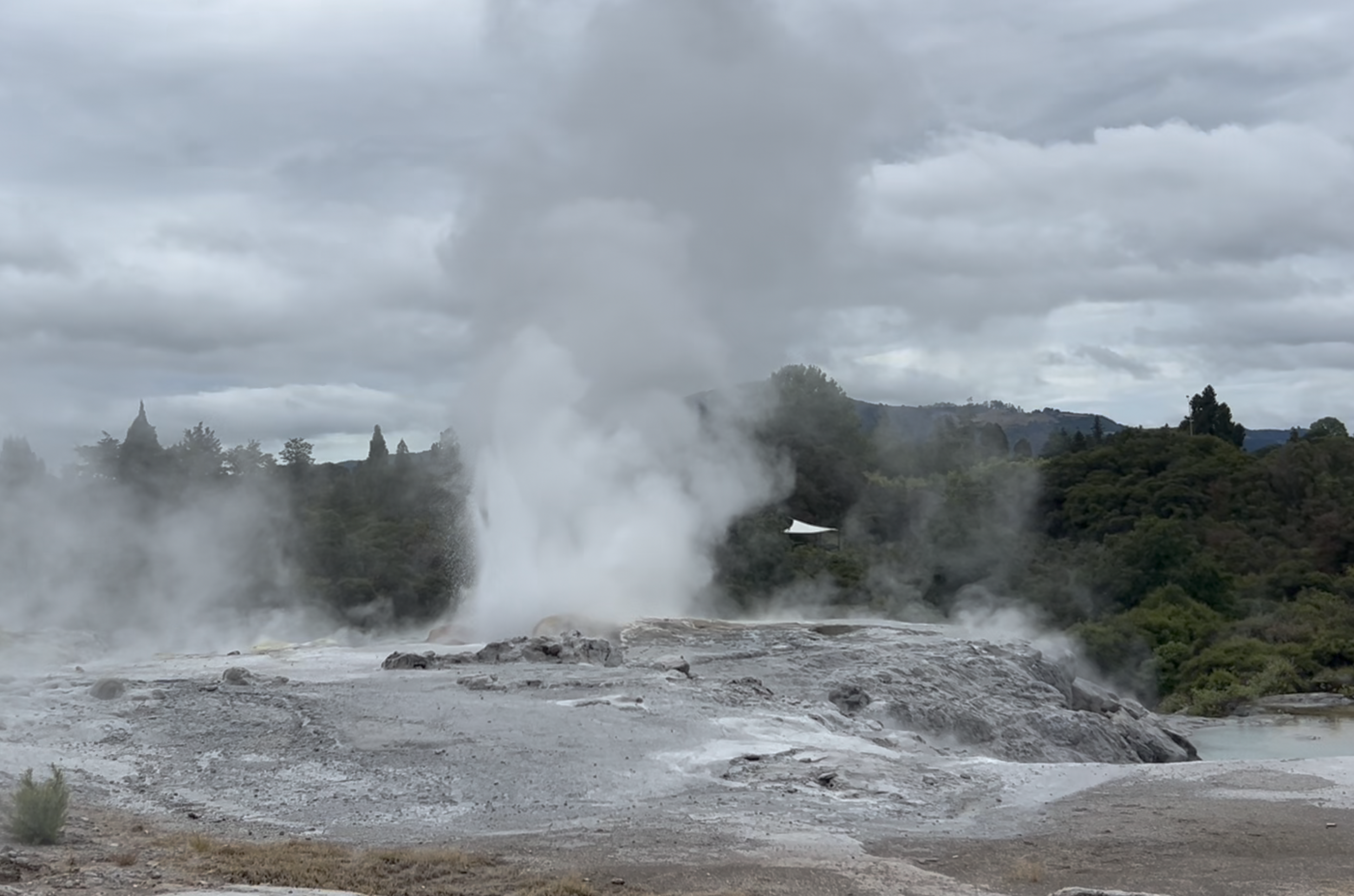
The Pohutu Geyser erupts about once an hour, reaching as high as 30 meters.
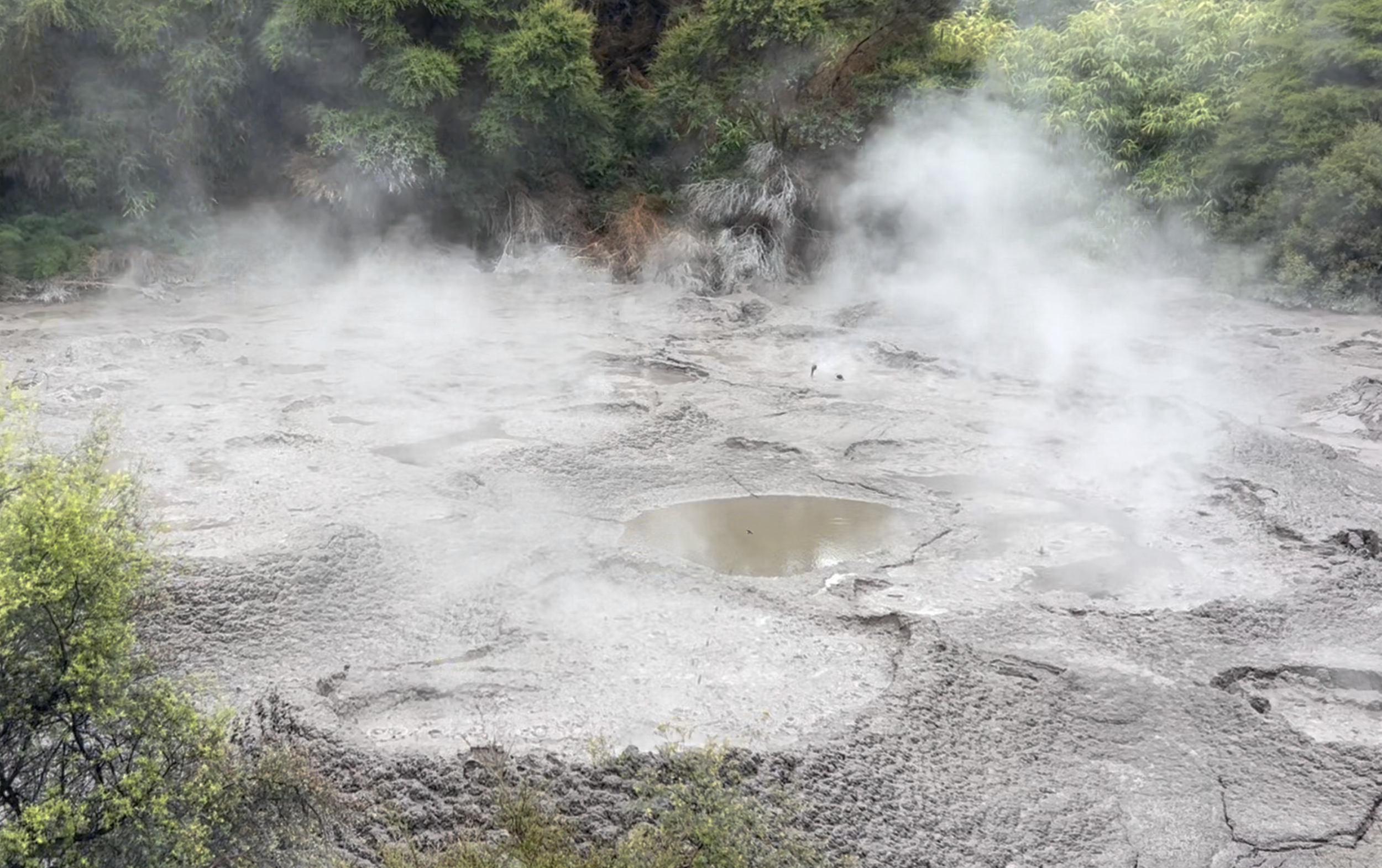
The mud pools constantlt bubble and plop, venting the steam accumulated underneath.
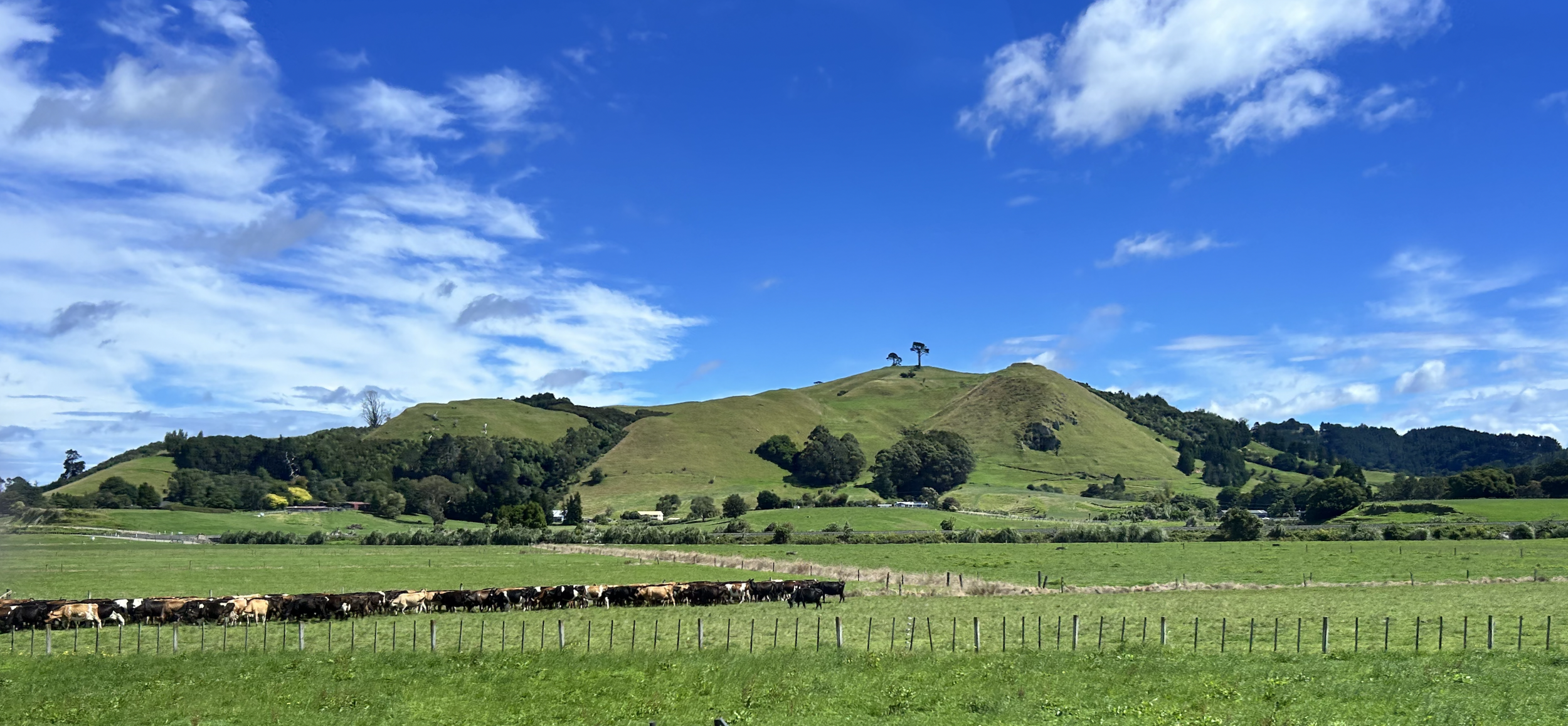
The ride back to the ship was blessed with clearing skies and sunshine. Along the way we passed some cattle pasturing at the foot of a hill that was the sight of a Maori fortress before the arrival of Europeans.
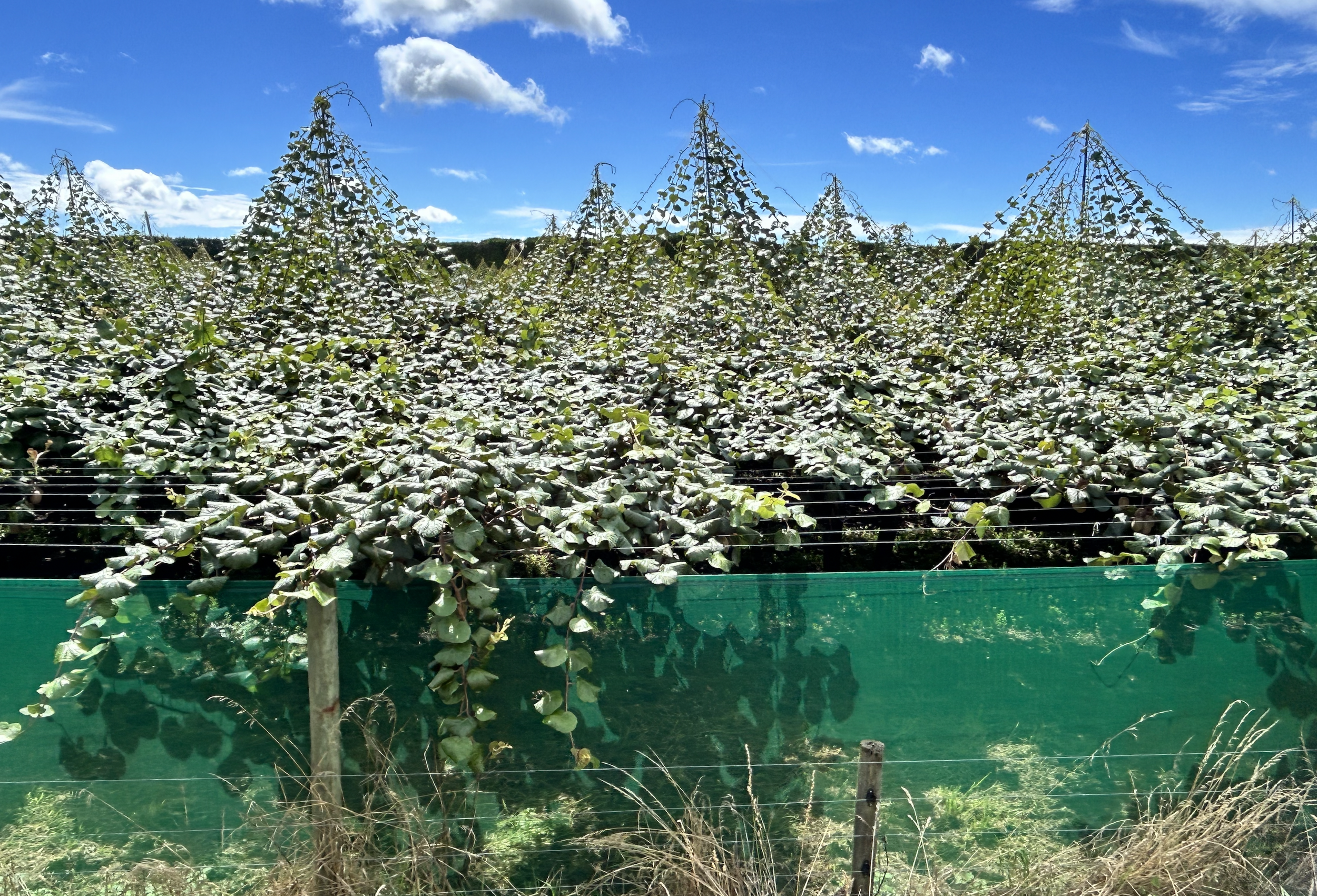
Among the other bounties of New Zealand agriculture is the global supply of Kiwi fruit. It is grown on a cable lattice suspended head high above the ground and surrounded by wind breaks.
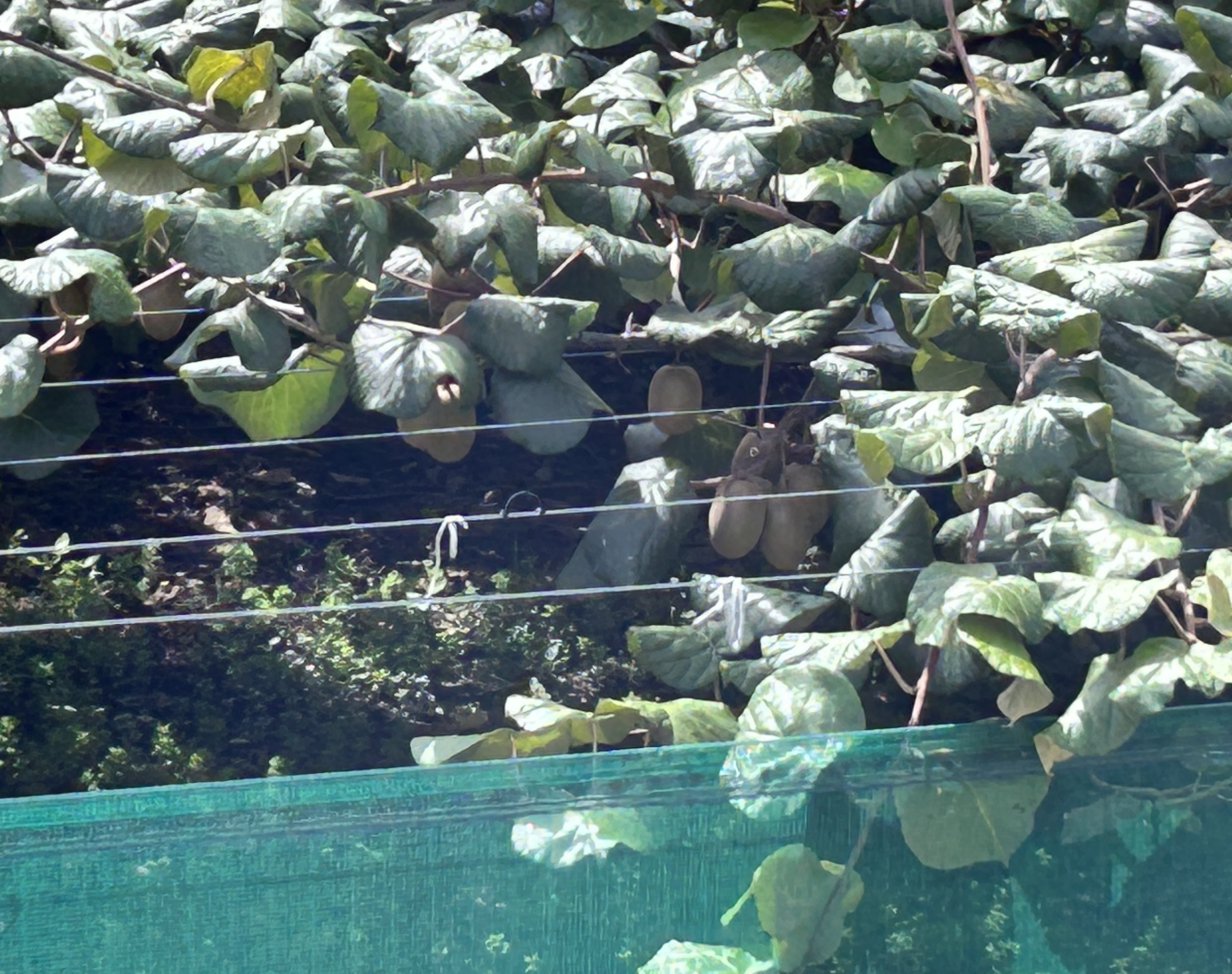
The fruit grows in clumps and the wind protection keep them from getting bruised by banging against each other.
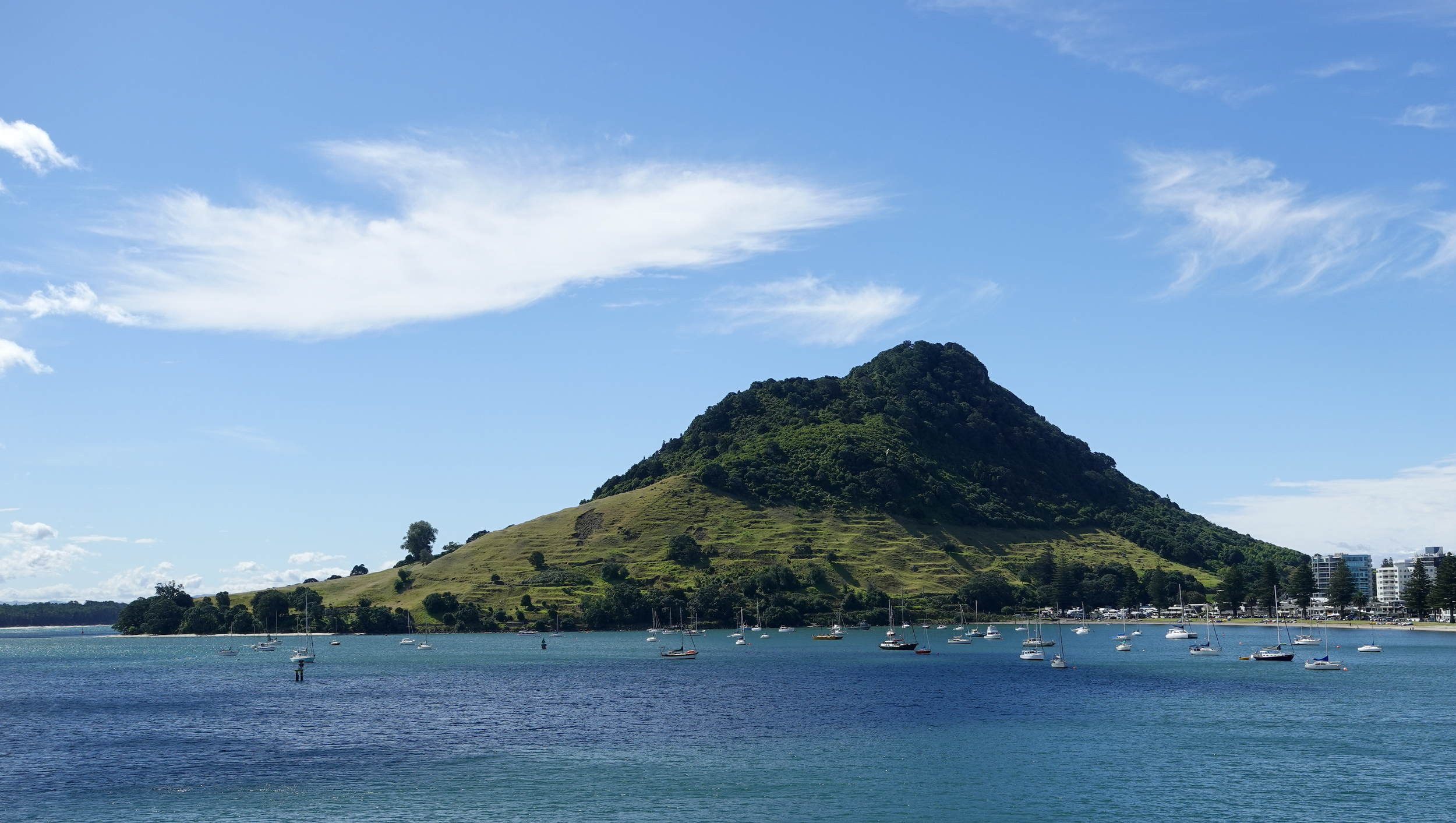
The day ended right where it started, but bathed in beautiful sunlight. It was the last good weather we’d see for a month.