New Year, New Adventure: Part 6 of 13
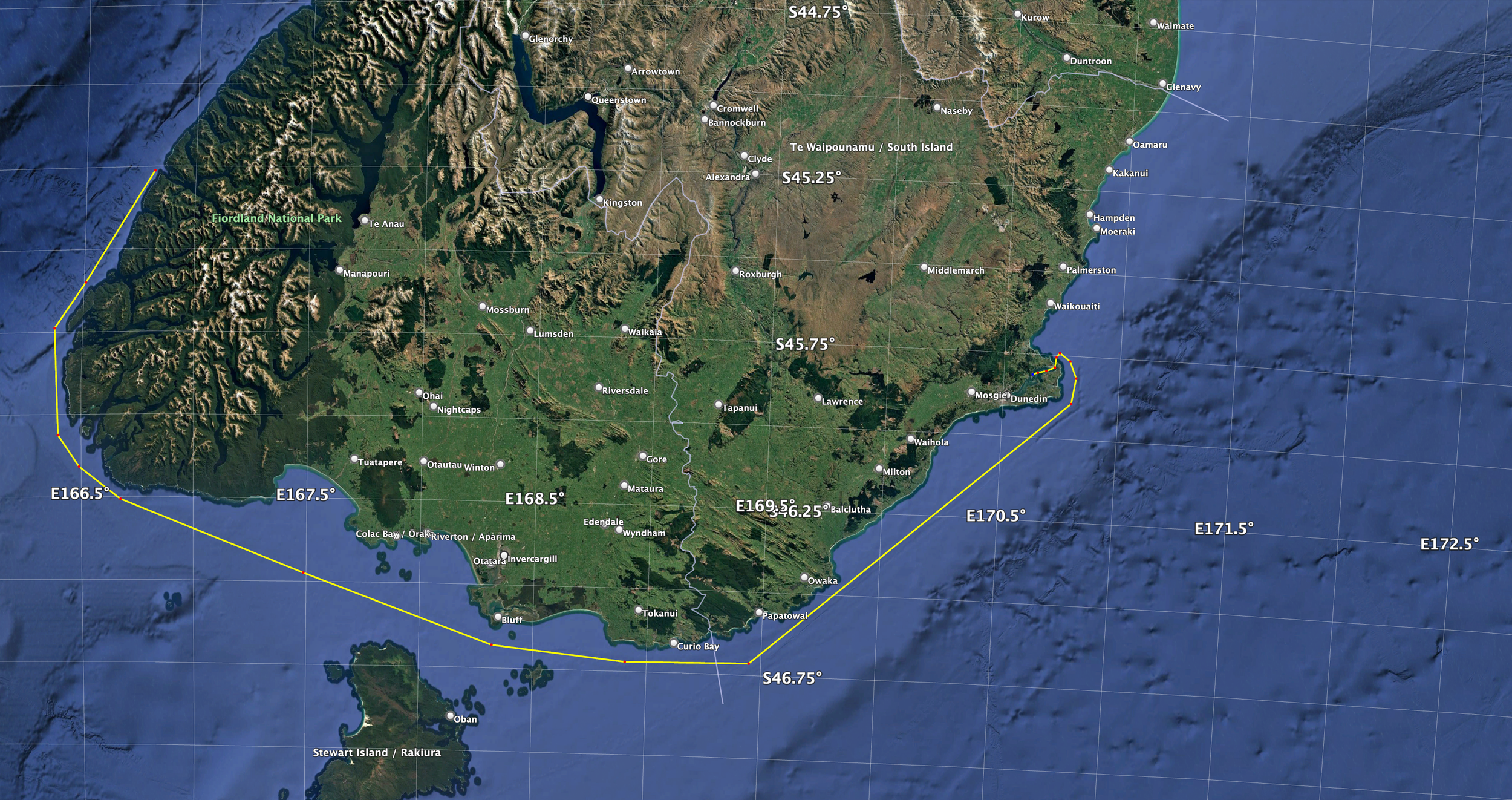
The lumpy and windy journey aroud the south end of the island ended at Port Chalmers, the deep water port serving Dunedin. We spent a night in the port hiding from the weather system crossing the Tasman Sea.
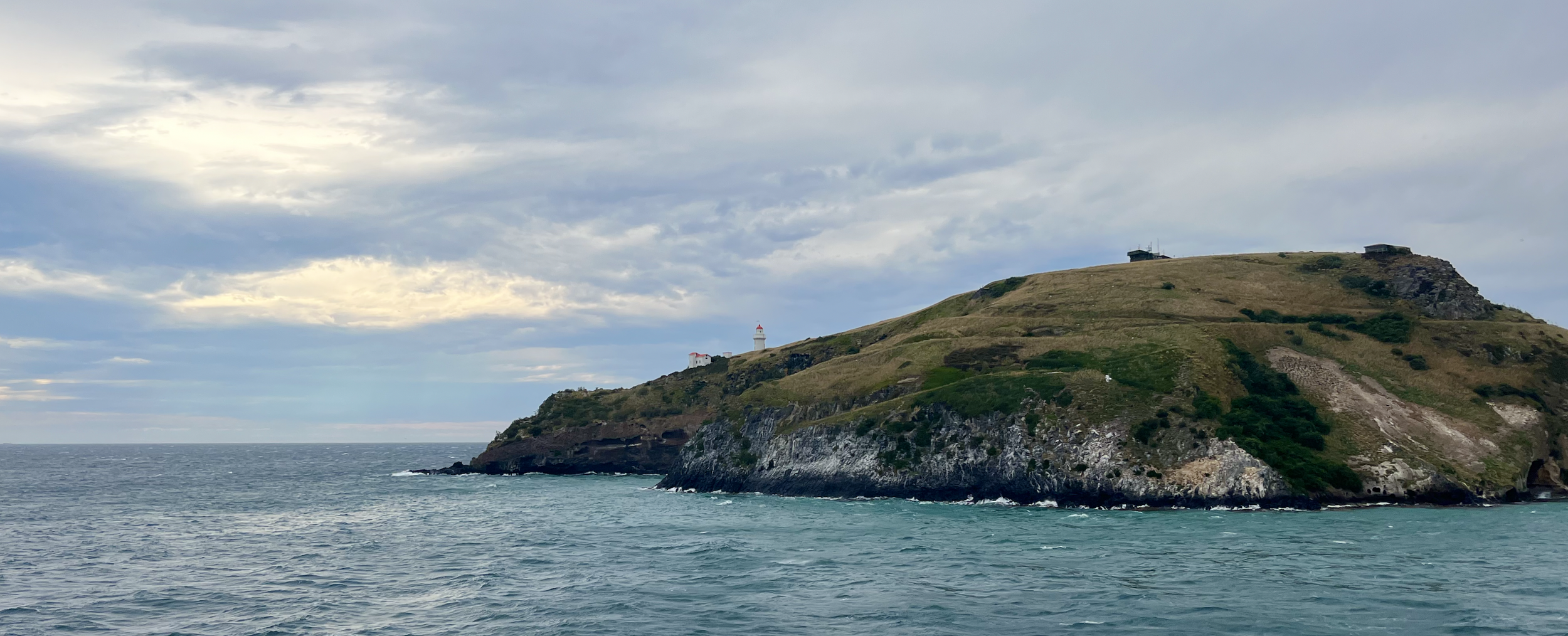
Passing Taiaroa Head at the entrance to Otago Harbour. It is home to a coastal artillery battery dating back to the late 1880s, sheep, seals, and sea birds. It’s also a lunch stop for hungry sea lions.
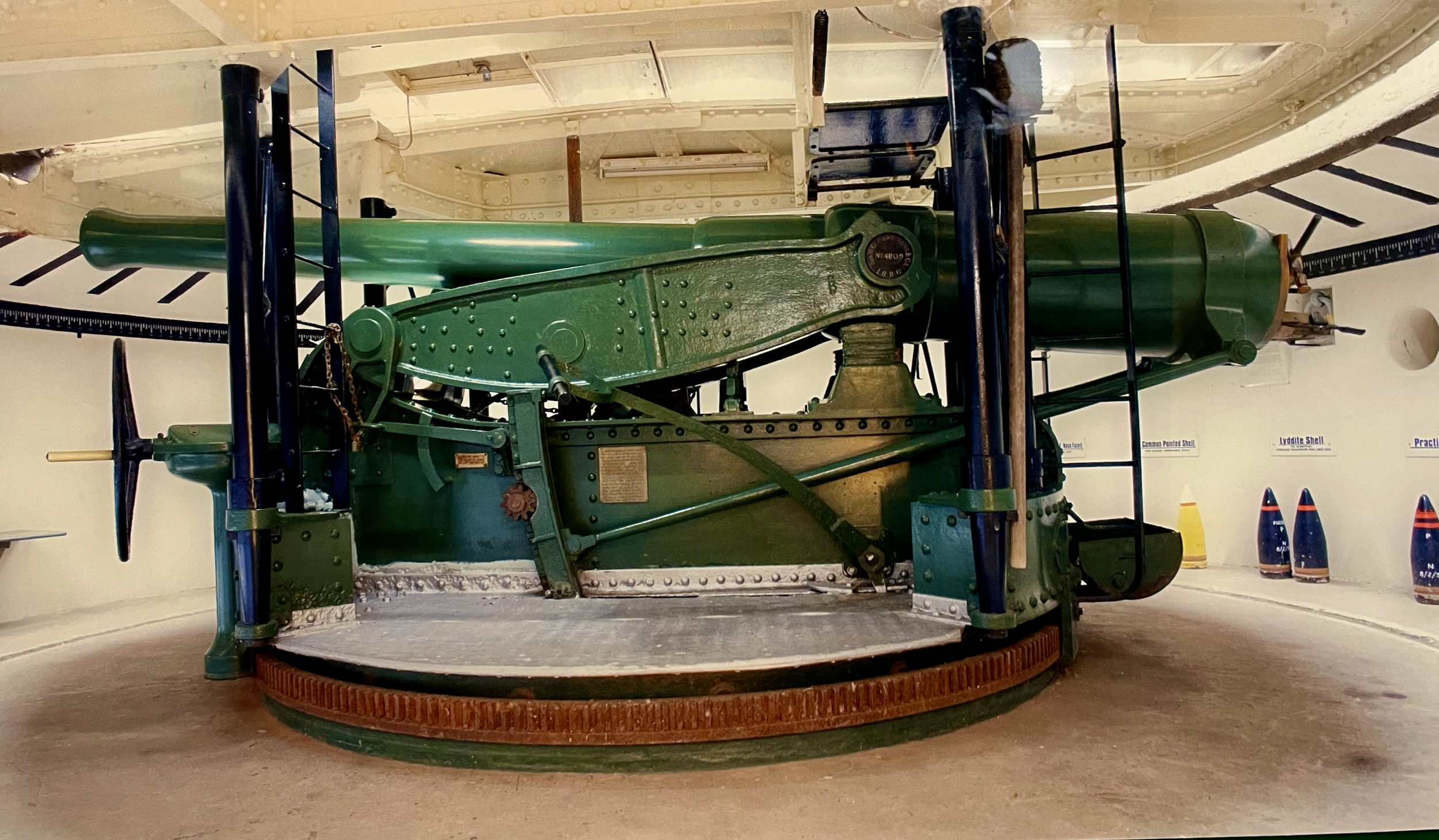
The six inch Armstrong Disappearing Gun and turn table built into Taiaroa Head.
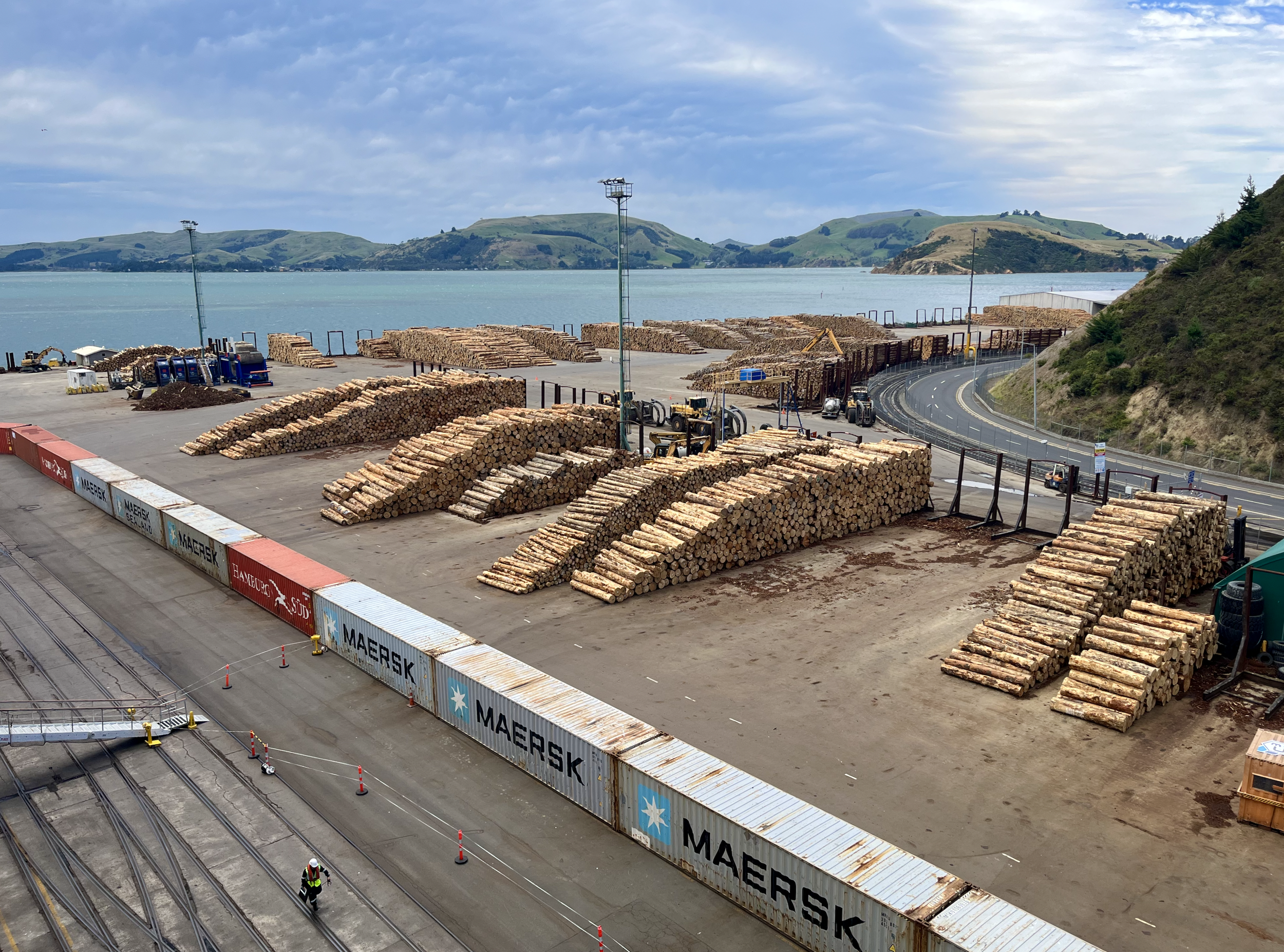
One of the first things a visitor learns is that Monterey Pine is one of the economic engines of New Zealand. It is exported to China for pulping. It also makes a pleasant wood smell that wafts over the harbor.
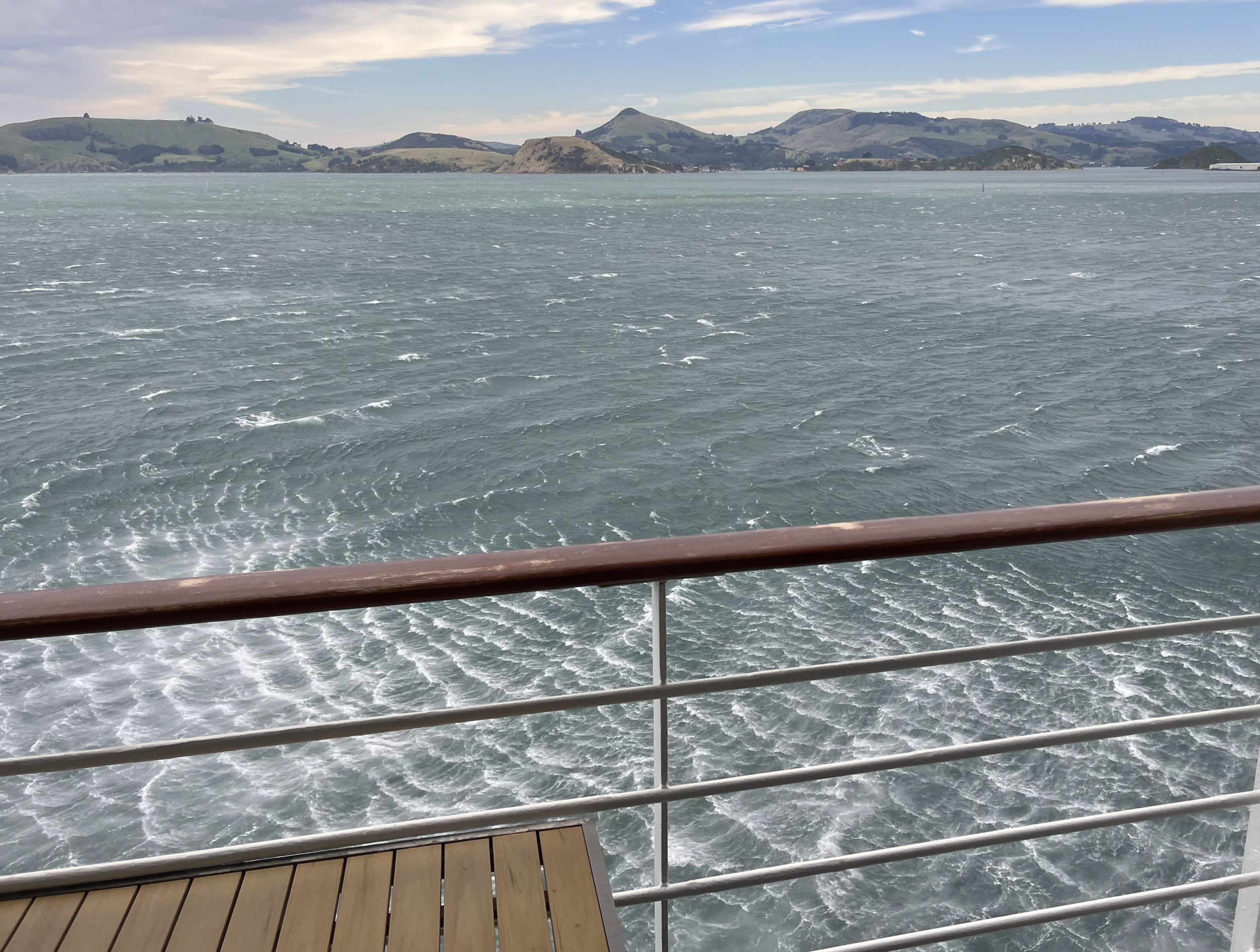
For the sailors, the signs and indications of a ripping wind were plentiful on Otago Harbor during our visit.
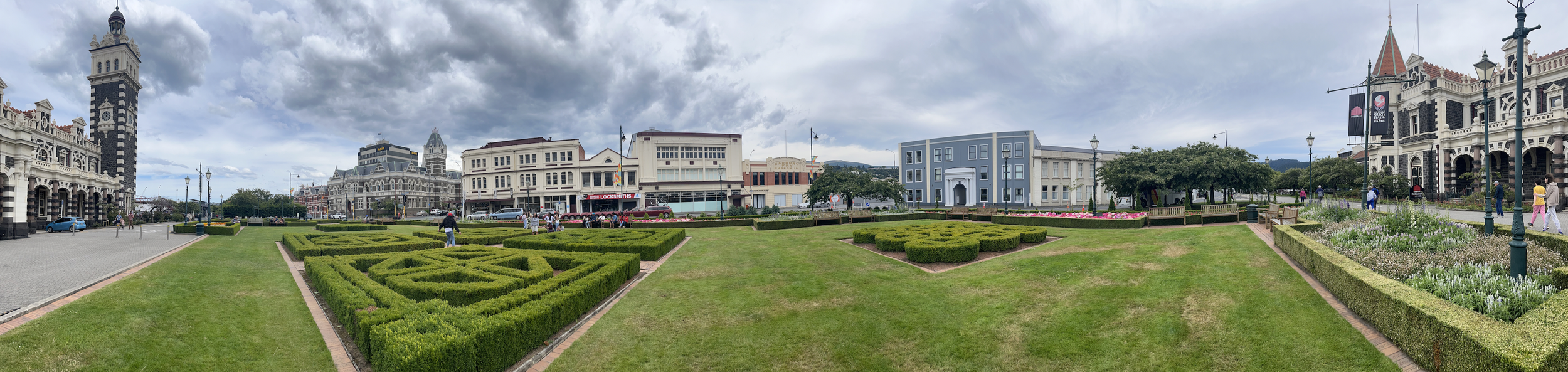
Traveling around Otago Harbor on our first outing, we passed through the city of Dunedin and Anzac Square. The area was settled by Maori around 1300, followed by europeans in 1748, and was incorporated in 1855 when it was built up in the Victorian style.
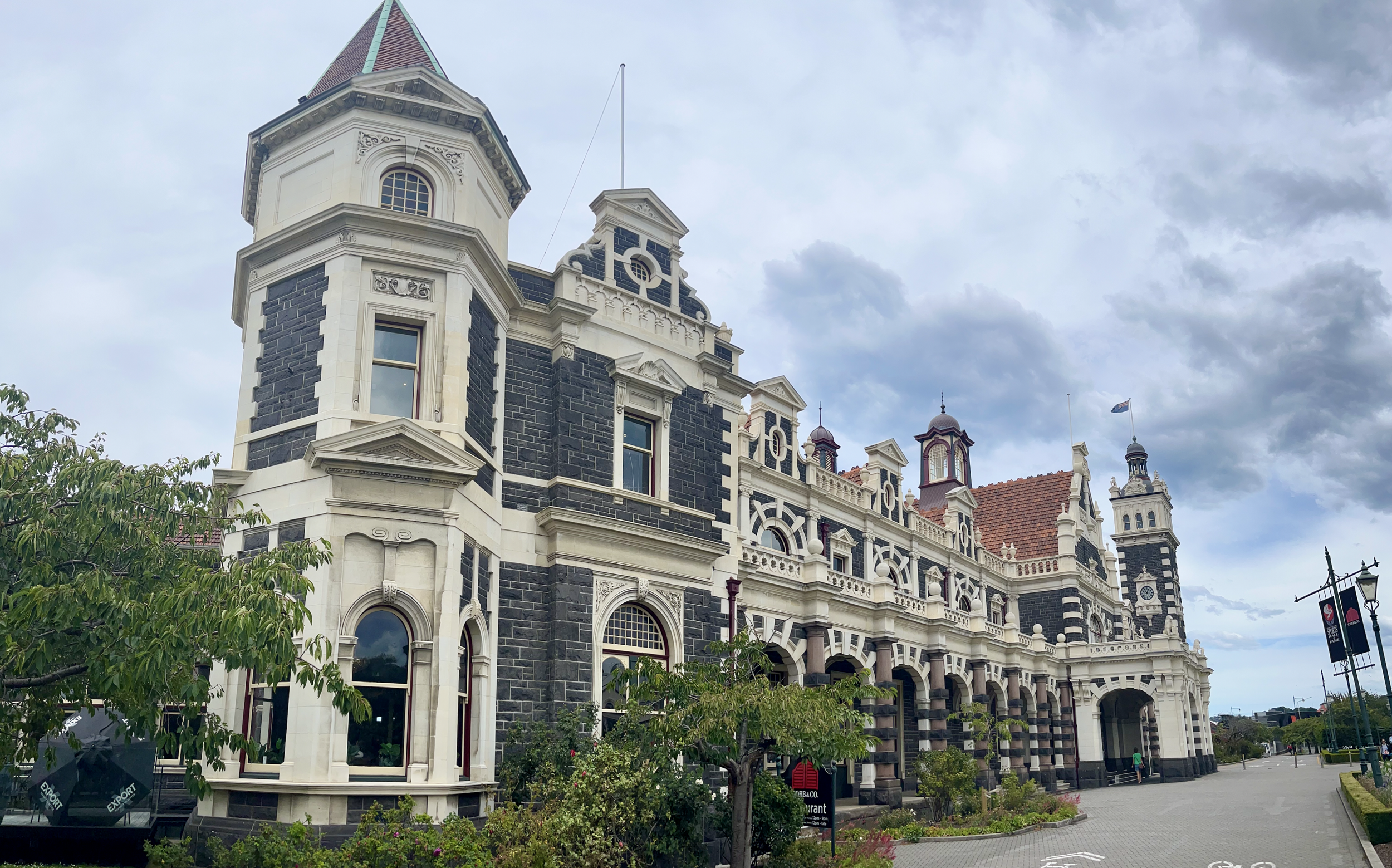
Opened in 1906, the rail station handled up to 100 trains a day. The building is reputed to be the second most photographed in the southern hemisphere, behind the Sydney Opera House, of course. It now handles scenic train rides and houses museums.
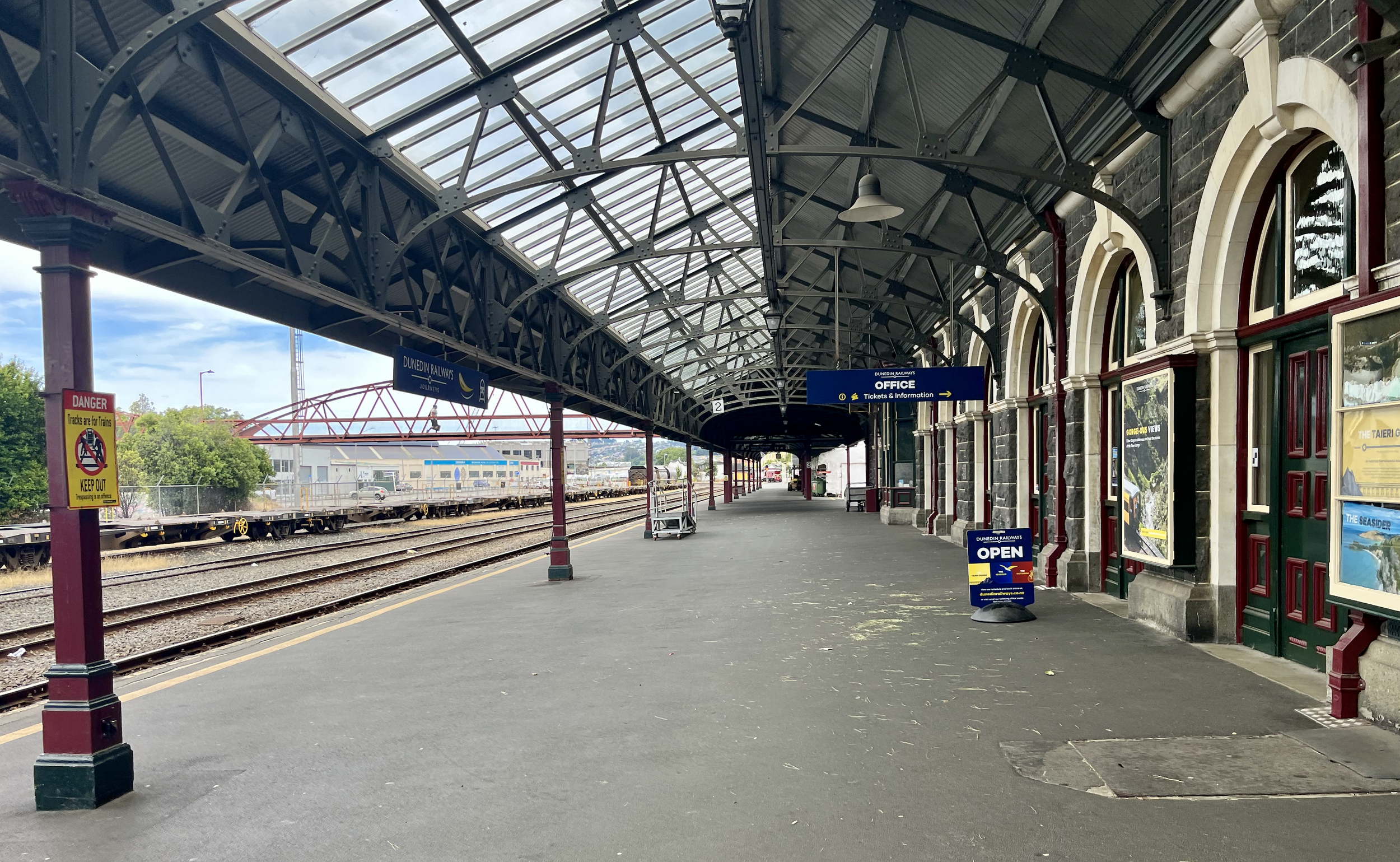
The platform at the back of the Dunedin railway station looks like its ready for the next train at anytime.
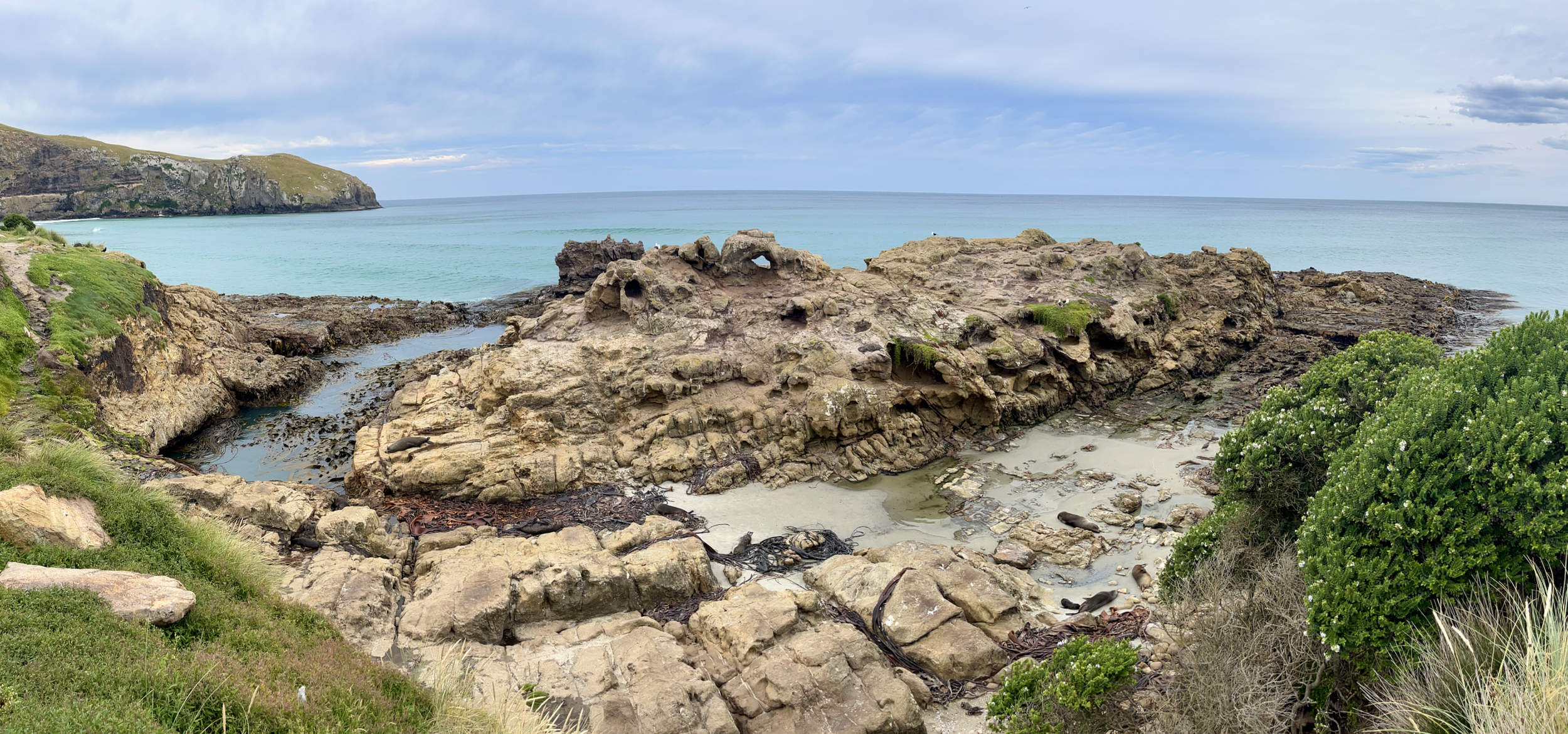
Out on the Pacific ocean side of Taiaroa Head, there is a wildlife sanctuary that host Antipodean Fur Seals and Little Blue Penguins. Our arrive coincided with baby time. Pups and chicks were visible all around the sanctuary.
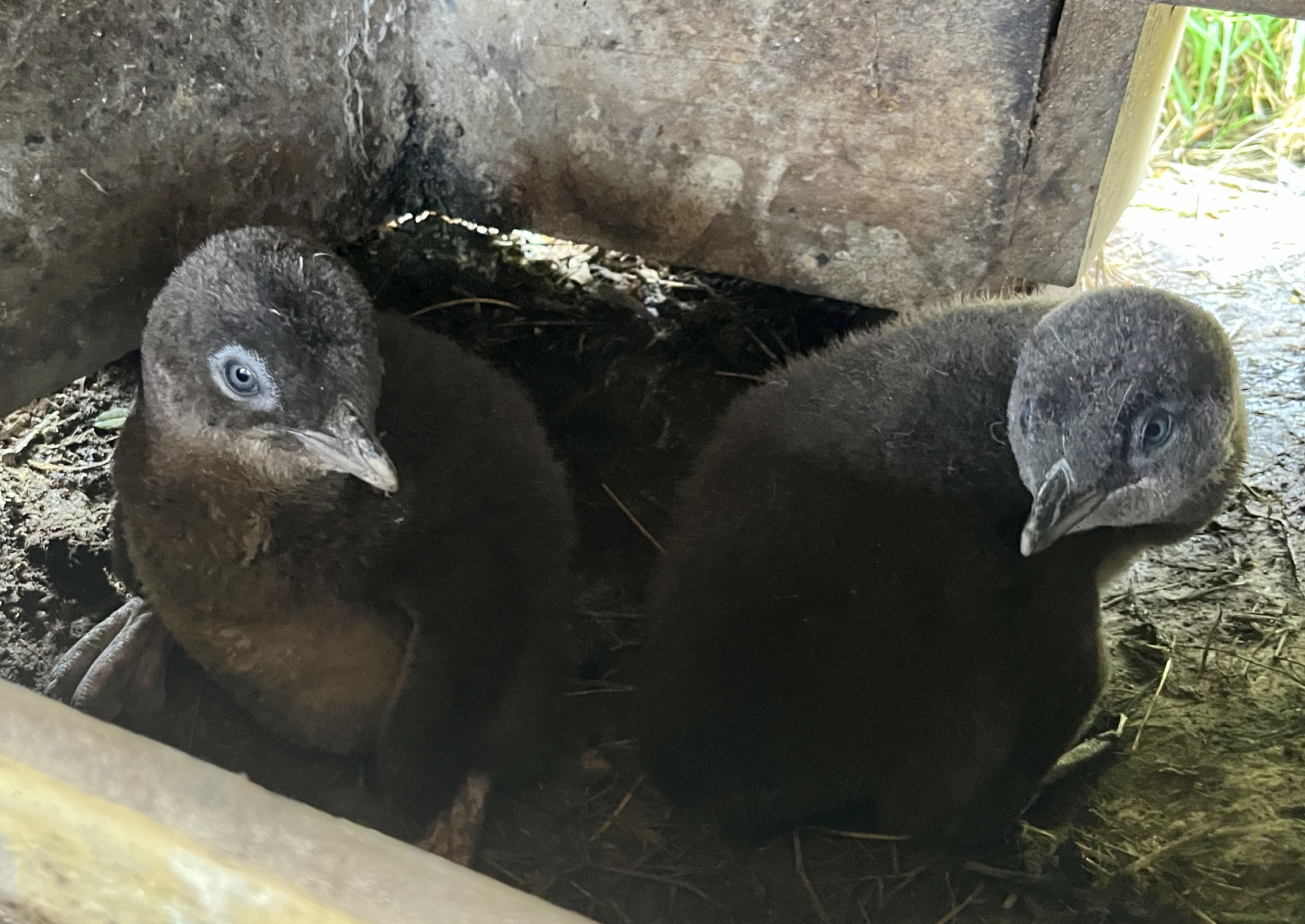
Fuzzy penguin chicks waiting for dinner delivery in a man made nesting box designed to increase reproduction.
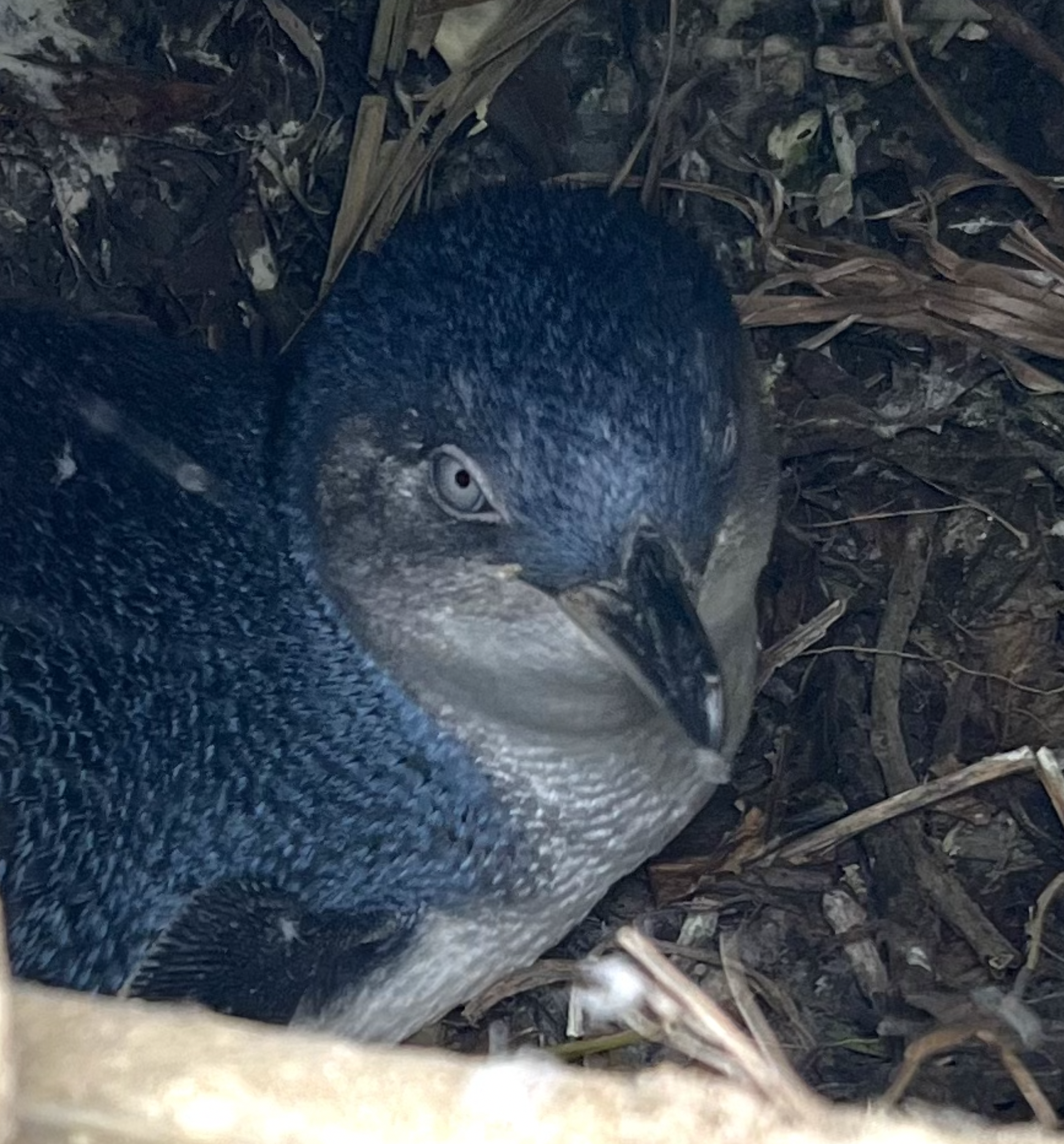
An adult Little Blue Penguin sitting on a nest. Considered the smallest penguin, they weigh in at 2 pounds and stand 10-12 inches tall.
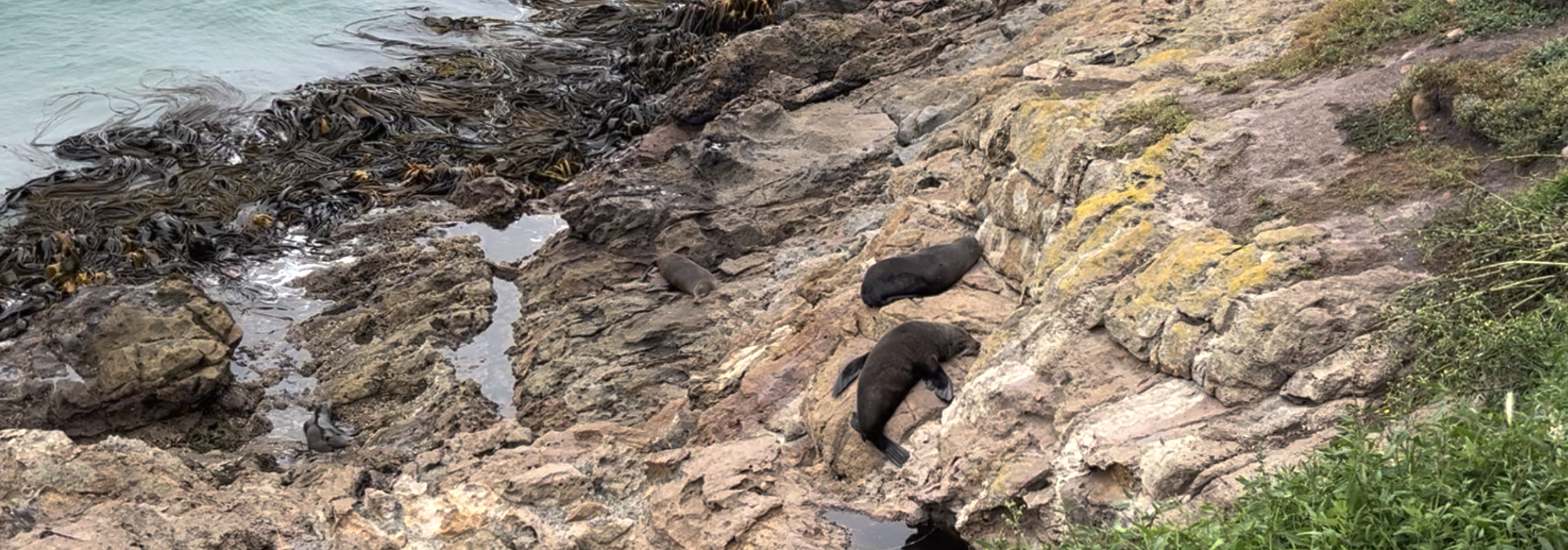
Fur Seals basking on the rocks, contemplating a swim in search of anchovy and arrow squid.
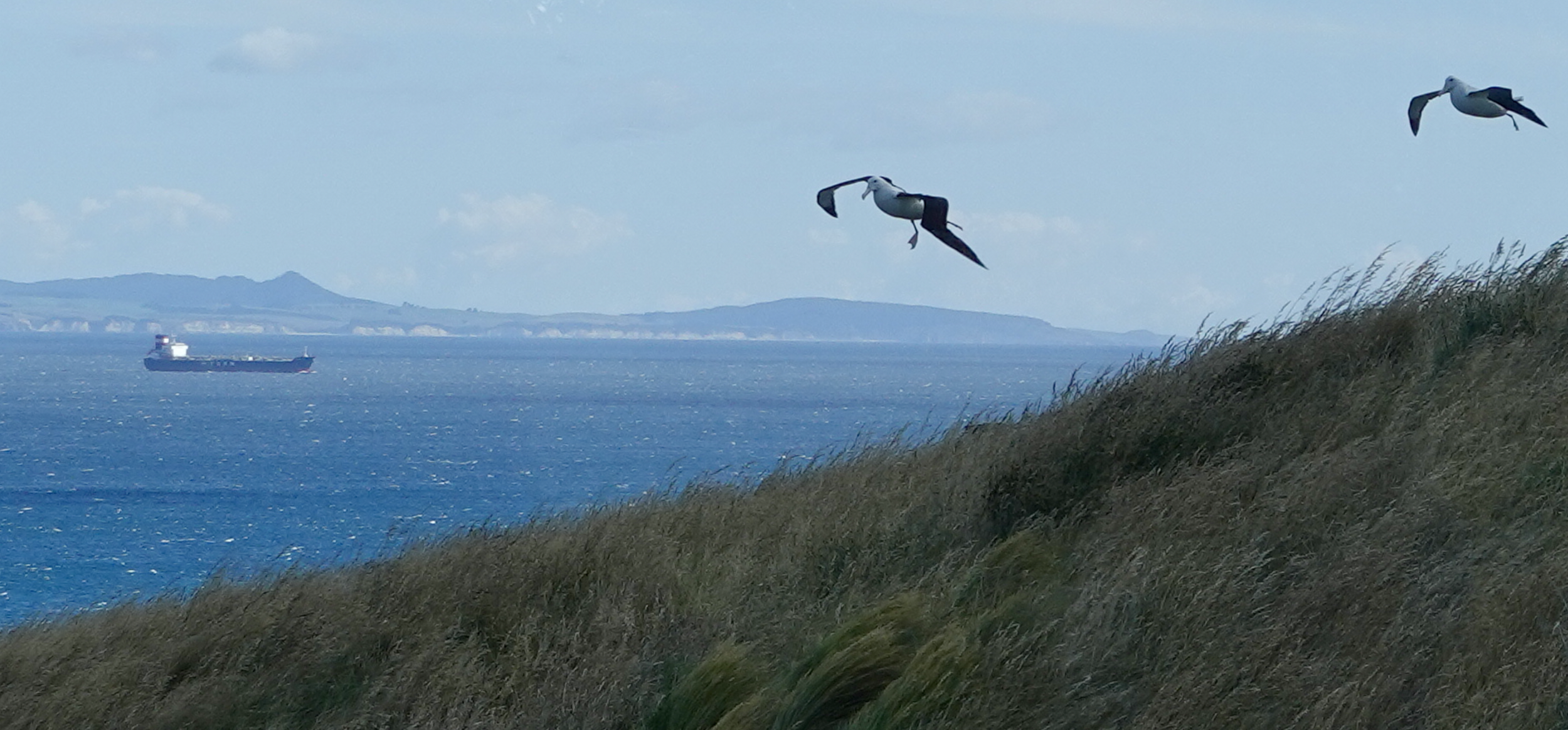
Back on the windy harbor side of Taiaroa Head, a sanctuary is maintained for about 60 nesting pairs of Royal Albatross. The birds appreciate the high winds on the slope. Like a hang glider, just spreading wings results in takeoff. Landings are not graceful.
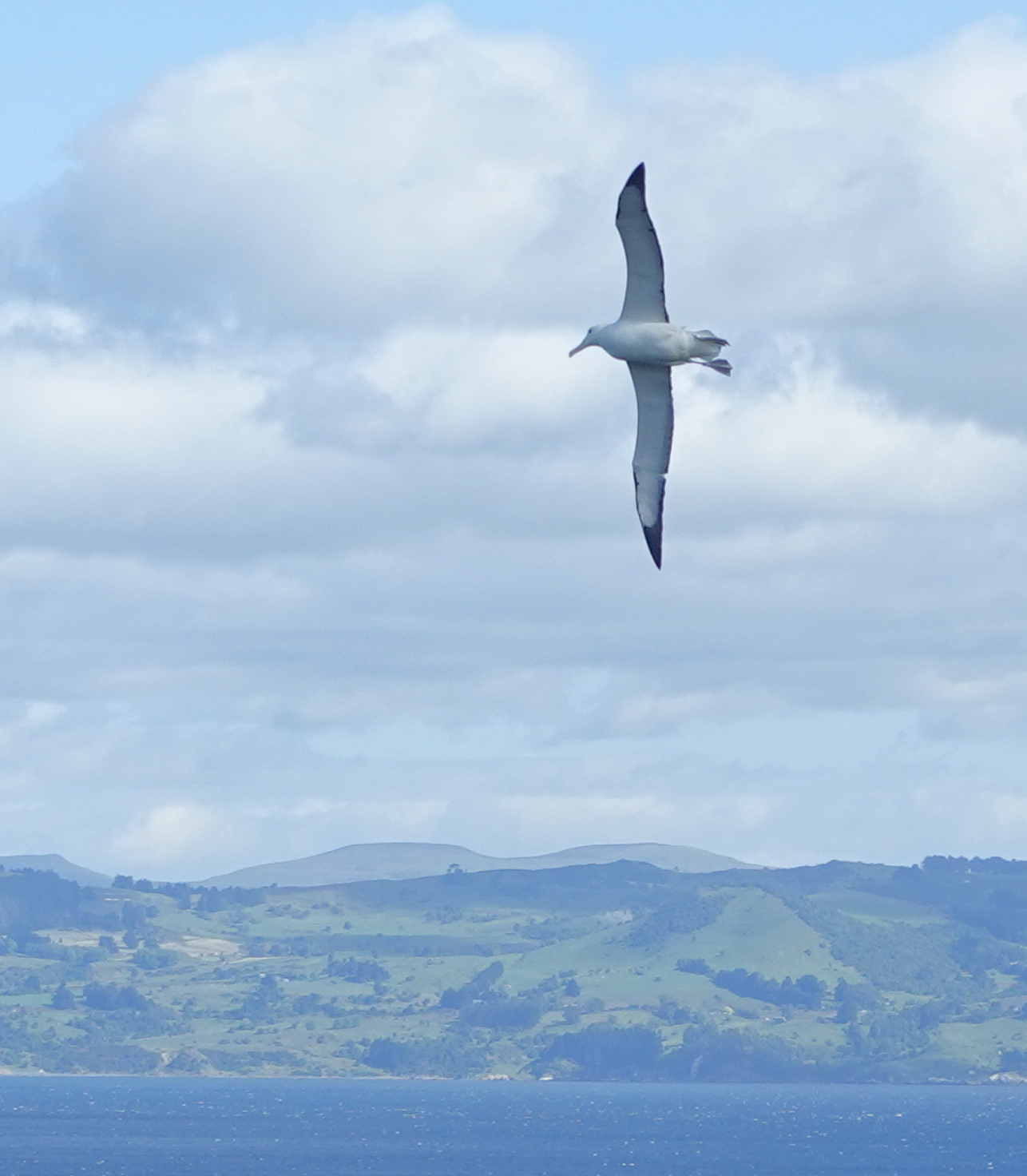
The Royal is considered the largest of the Albatross family. They check in at up to 18 pounds and 10 foot wingspan. It is frankly hard to appreciate the size of these birds until they are seen in person.
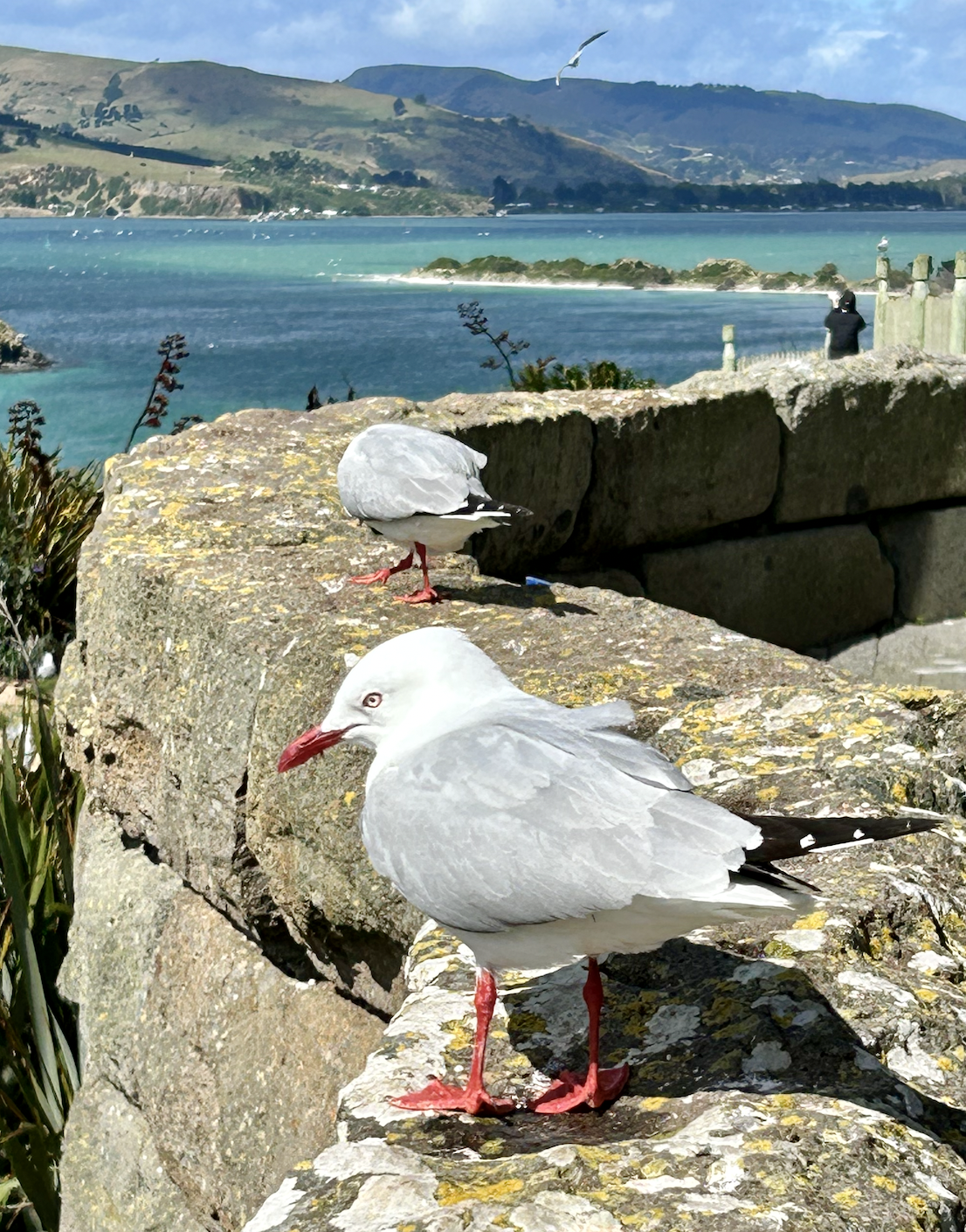
On the lee side of the hill, a more common variety of bird nests in the long grass of the sheep pasture. The Red Billed Gull is considered the smallest of the kleptoparasites in New Zealand.