Three Highlights from Vacation
This summer’s get-away was an old fashioned American road trip to a classic destination.
From hot and humid central Ohio, we rolled north through the rust belt cities of Toledo, Detroit, Ann Arbor, Flint, and Saginaw. At the top of the Michigan mitten we crossed the Mackinac Bridge onto the Upper Peninsula. The bulk of our down time was spent on the well worn paths of tourist magnet Mackinac Island, but along the way we made stops at various points of interest. The top three were the USCGC Mackinaw Museum Ship in Mackinaw City, The Great Lakes Ship Wreck Museum on Whitefish Point, and a tour of the Soo Locks in Sault Saint Marie.
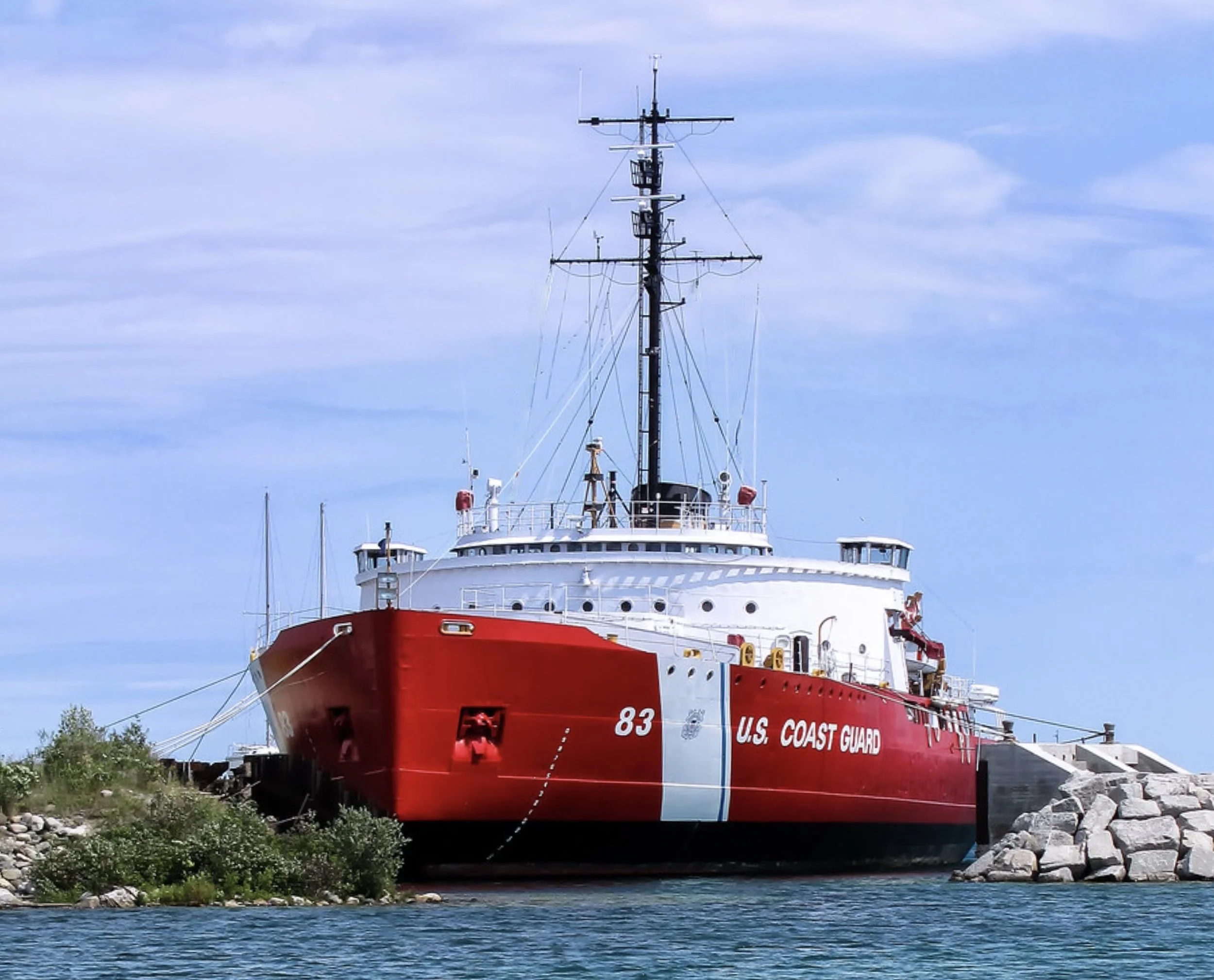
The icebreaker USCGC Mackinaw (WAGB 83) is permanently moored in its name sake city. Authorized in December 1941 and commissioned in 1944, she kept the shipping on the Great Lakes moving through the early and late season ice for 62 years. Mackinaw was replaced by another icebreaker of the same name in 2006. Owing to her abundance of thrust and powerful winch, Mackinaw was also a capable towing platform for stranded vessels.
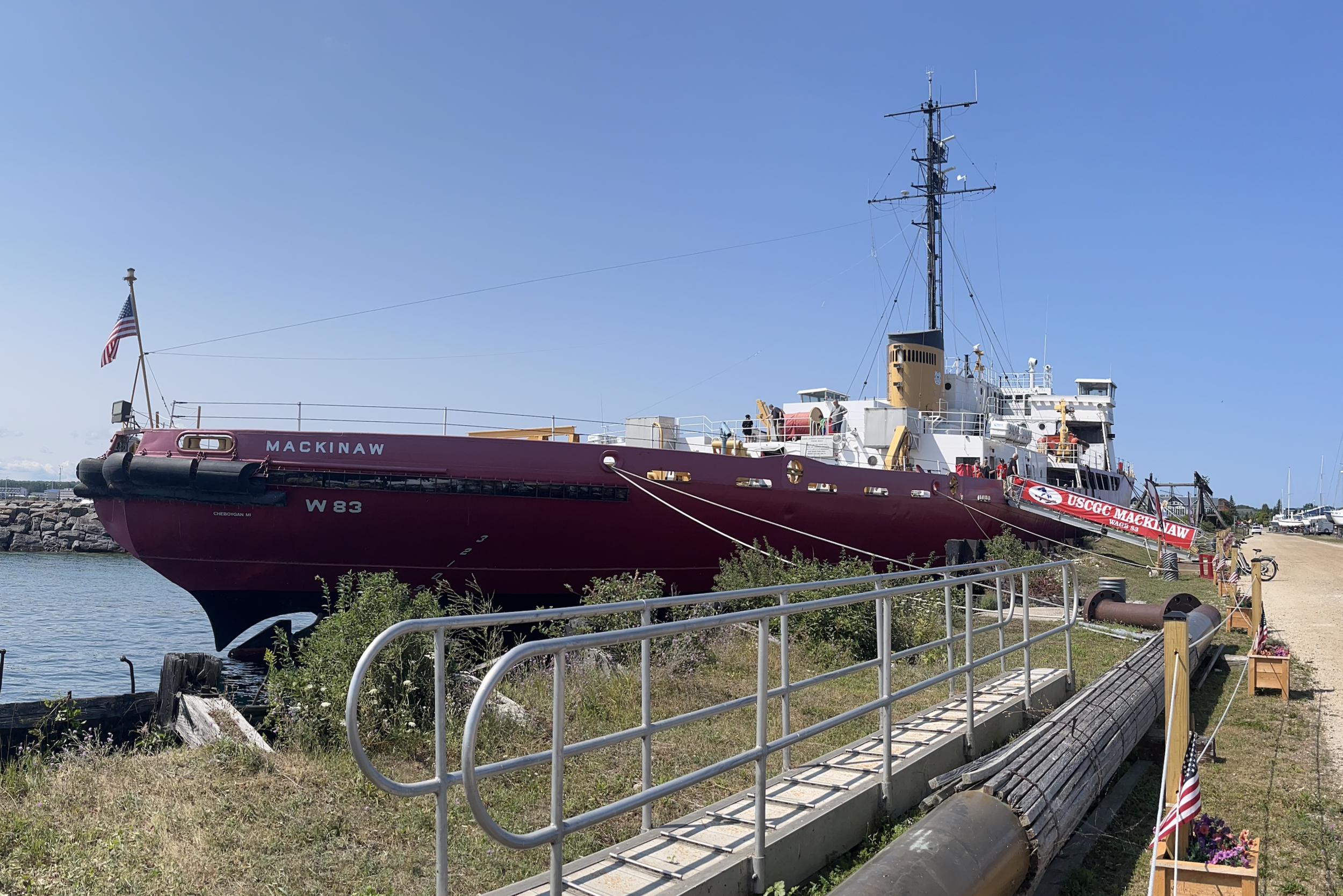
Built in Toledo, Ohio, USCGC Mackinaw is 290 feet in length with a beam of 74 feet and draws 19 feet. The ship is wide for her length in order to allow the shallower draft required for the Great Lakes.
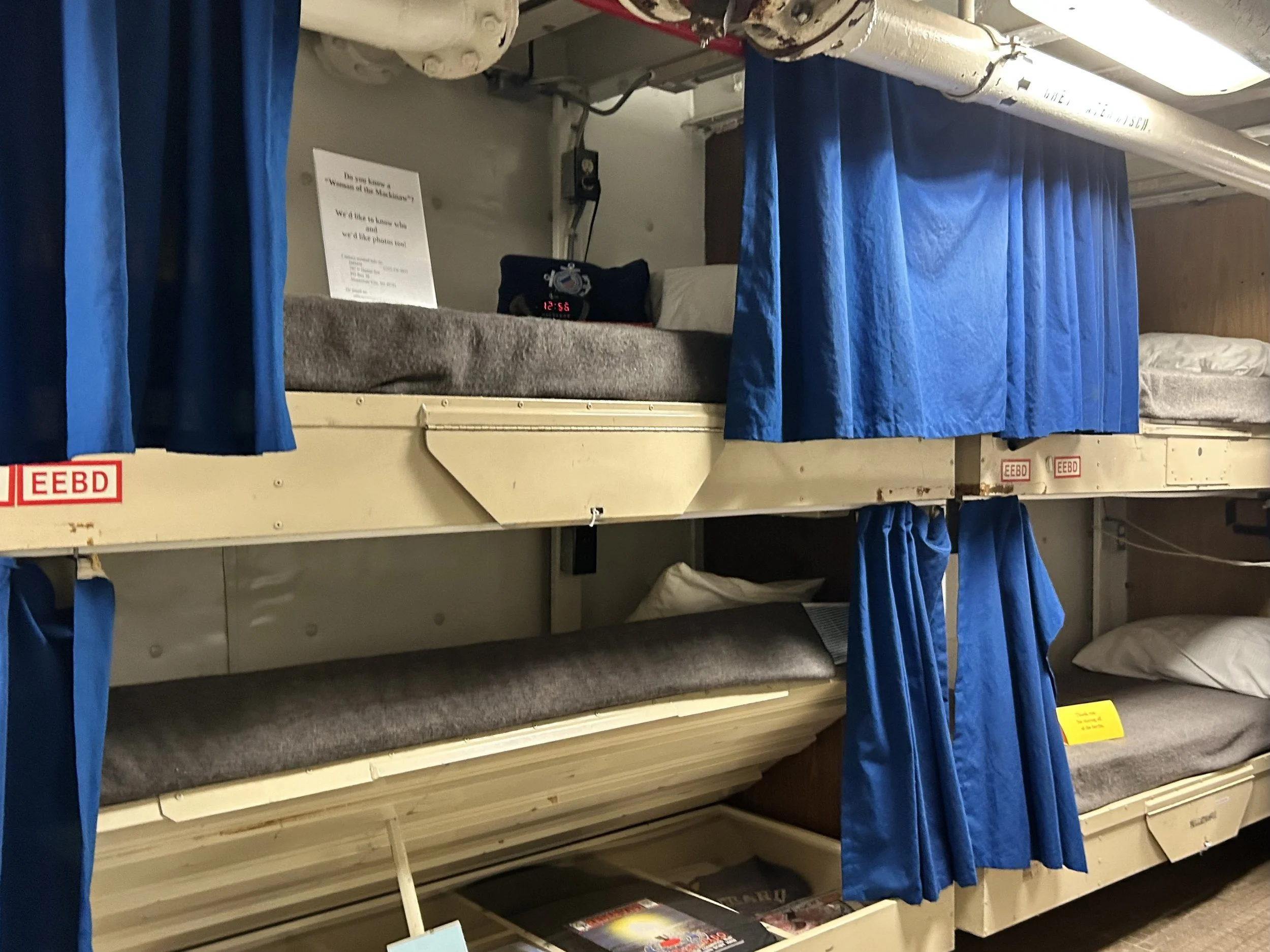
Any G.I. sailor can immediately recognize the crew quarters designed to accommodate the the crew of 8 officers and 67 enlisted. In 1991, some spaces were converted to accommodate female crew members.
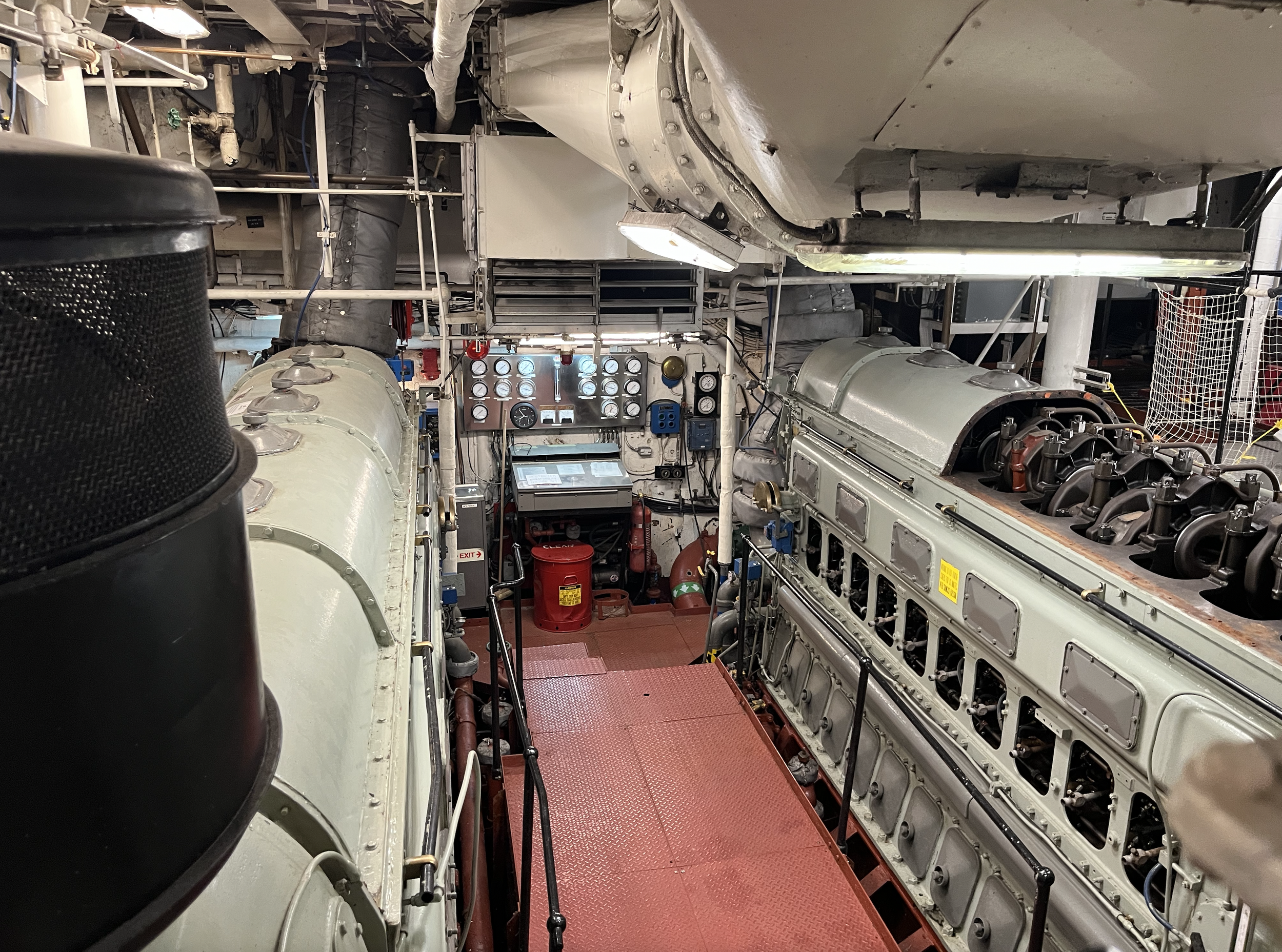
One of the three engine rooms. The displacement of 5252 tons requires six 2000hp Fairbanks-Morse 10 cylinder opposed-piston diesels driving three electric motor powered propellers, two aft and one forward. The ship carries 276,000 gallons of diesel fuel.
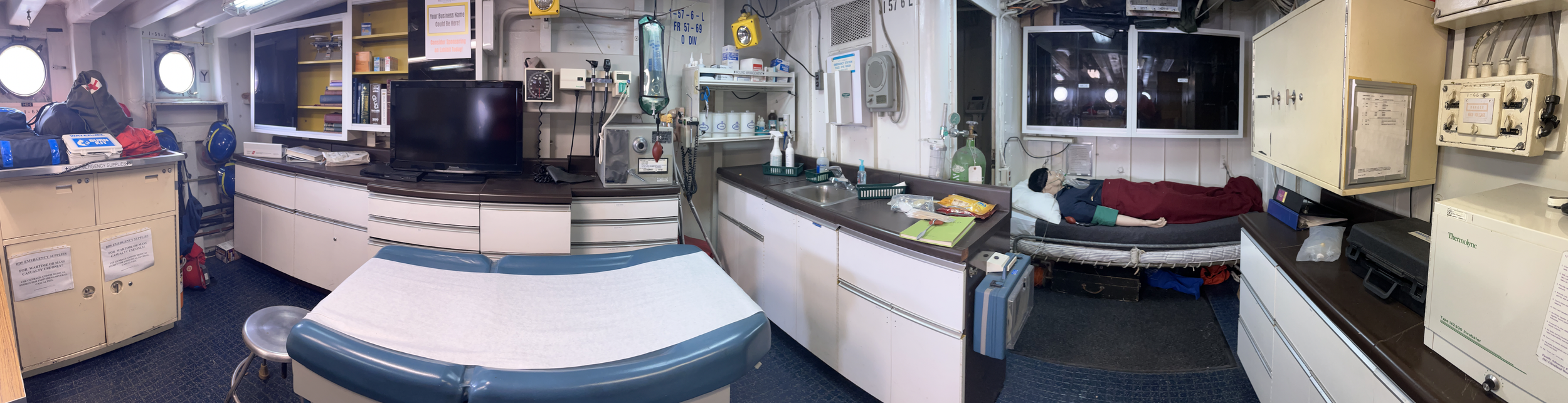
A visit to a U.S. government ship with The Captain isn’t complete without a look-see at the medical spaces. The port holes are a nice touch, making the cramped space a little more livable for the Health Services Technician (HS) the Coast Guard version of a medic or corpsman.
The second highlight was the USCG lighthouse at Whitefish Point and former Life Saving Service station turned Great Lakes Shipwreck Museum. Like the side quest to the icebreaker, the drive up was worth every minute. It was voted best museum on the trip by all members of our party.
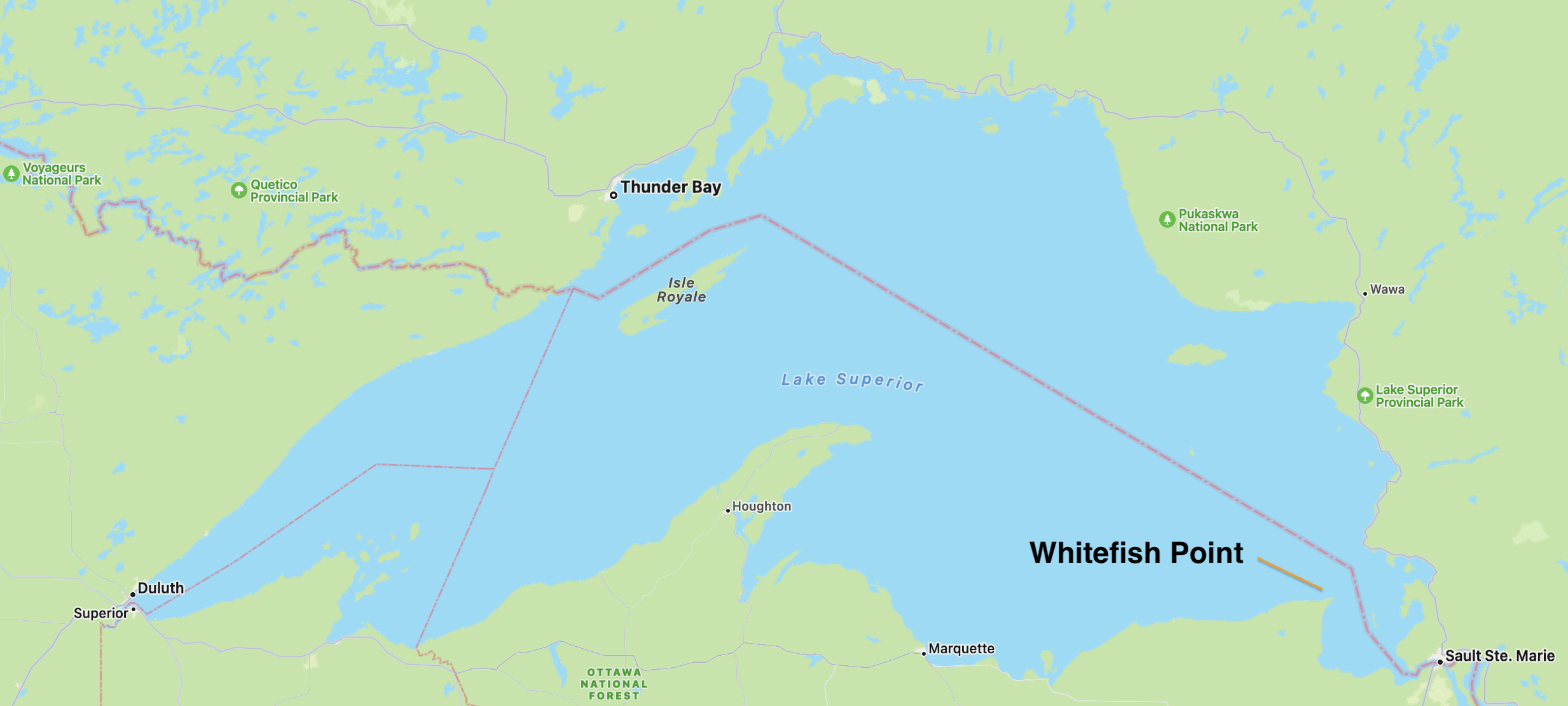
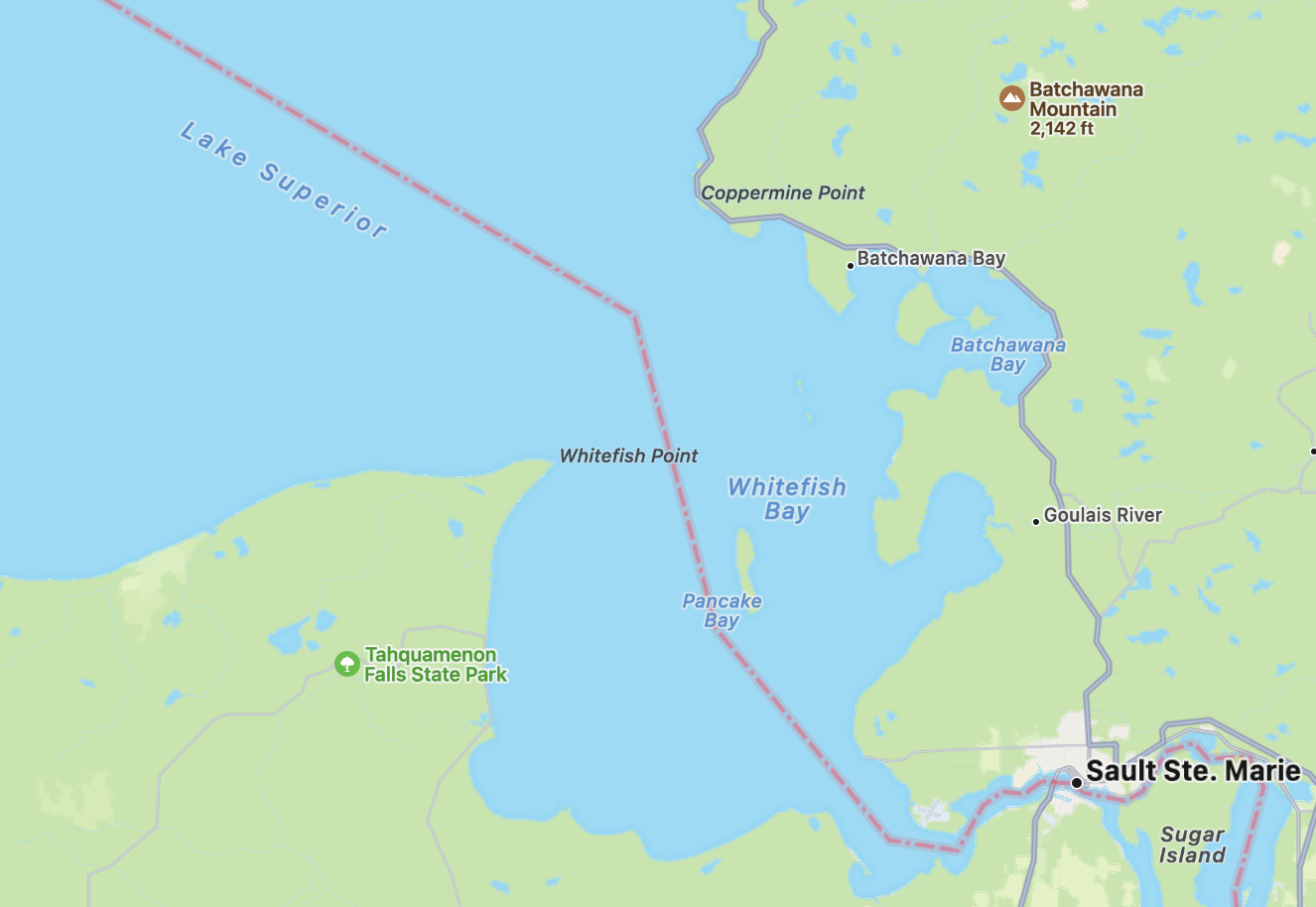
Located at the southeast corner of Lake Superior, Whitefish Bay is protected by Whitefish Point and provides ships refuge from the storms that blow down the length of the lake. The bay is also the inlet to the St. Mary’s River and the Soo Locks.
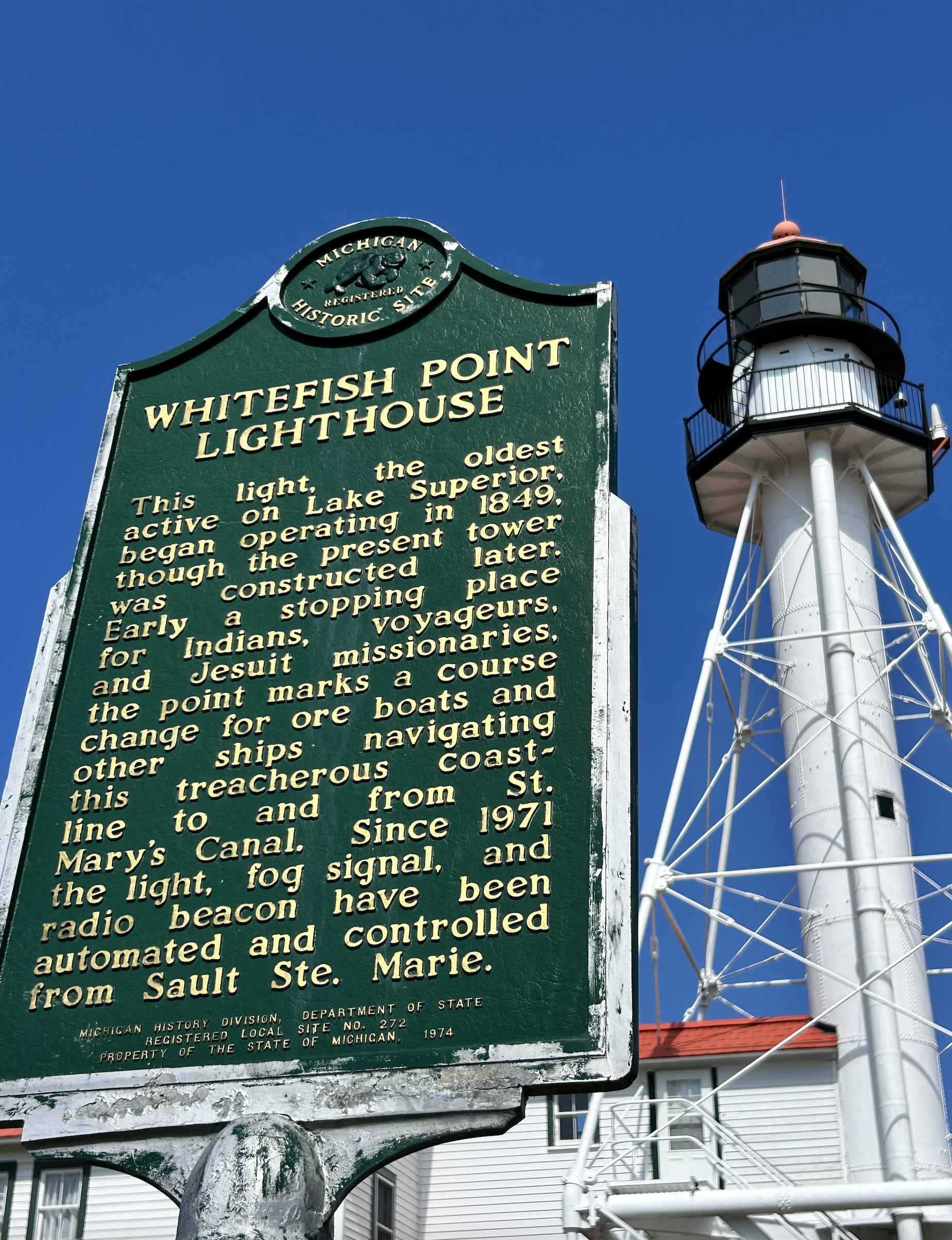
The lighthouse is a very rugged structure, built to withstand harsh winter storms on an exposed sand spit.
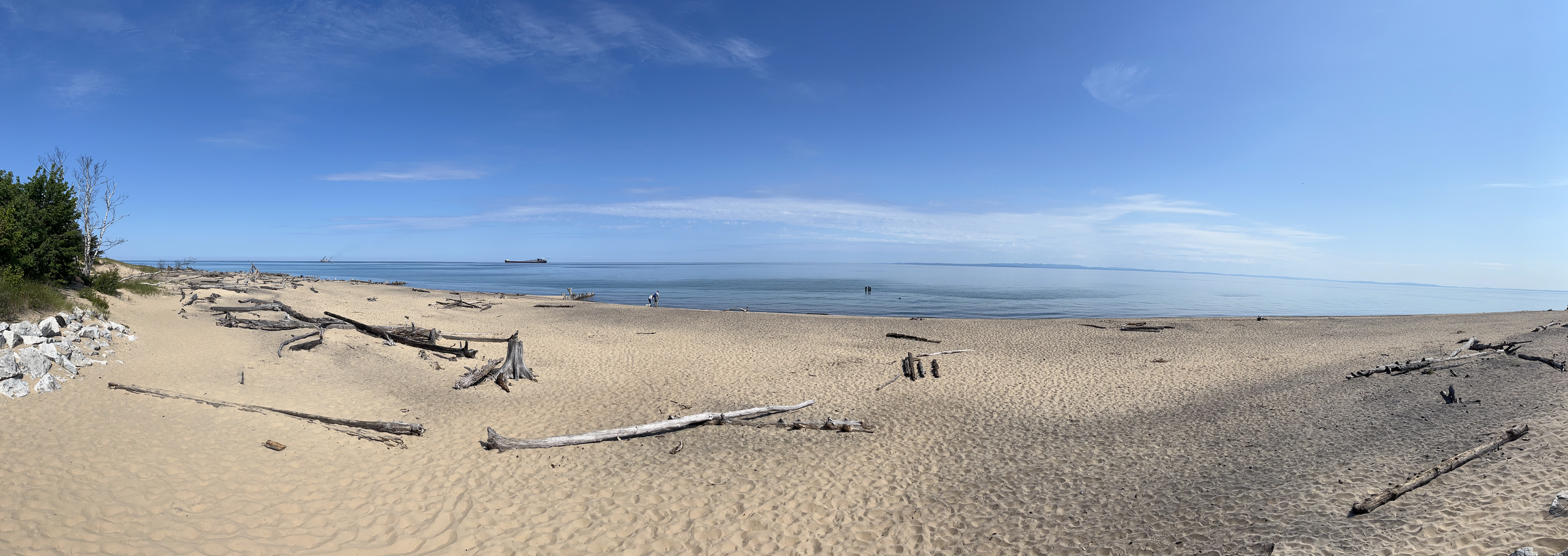
The view from the lighthouse front steps. A ship is visible transiting west out of Whitefish Bay. On the day of our visit, the lake was flat calm with just a few soft cat’s paws of wind ruffling the surface.
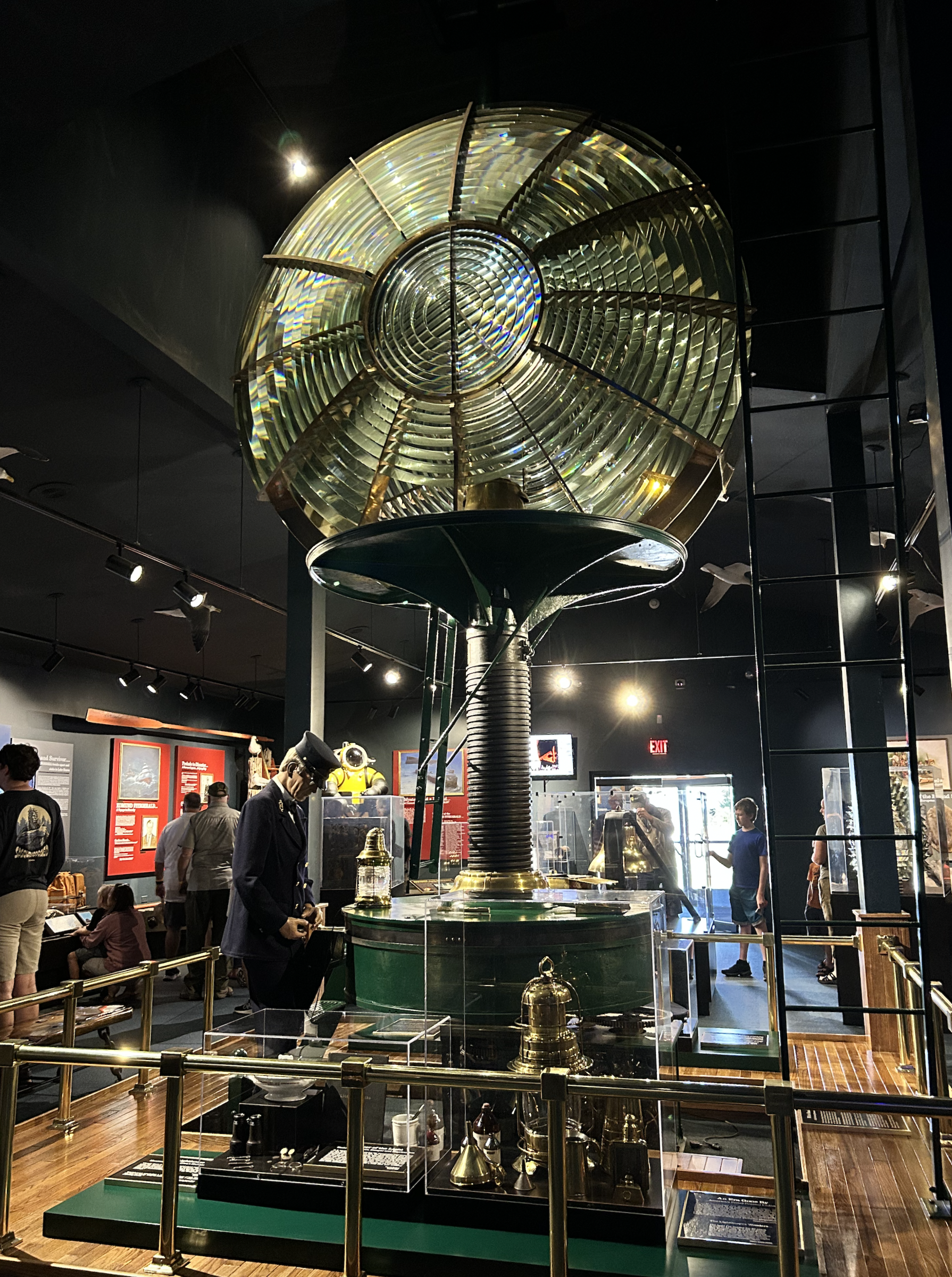
Inside the exhibit buildings, the history and heroism of the U.S. Life Saving Service and its eventual merger with the U.S. Coast Guard is recounted with artifacts and photos. The lighthouse keeper’s home is preserved and maintained by donations from the families of the keepers who served on Whitefish Point.
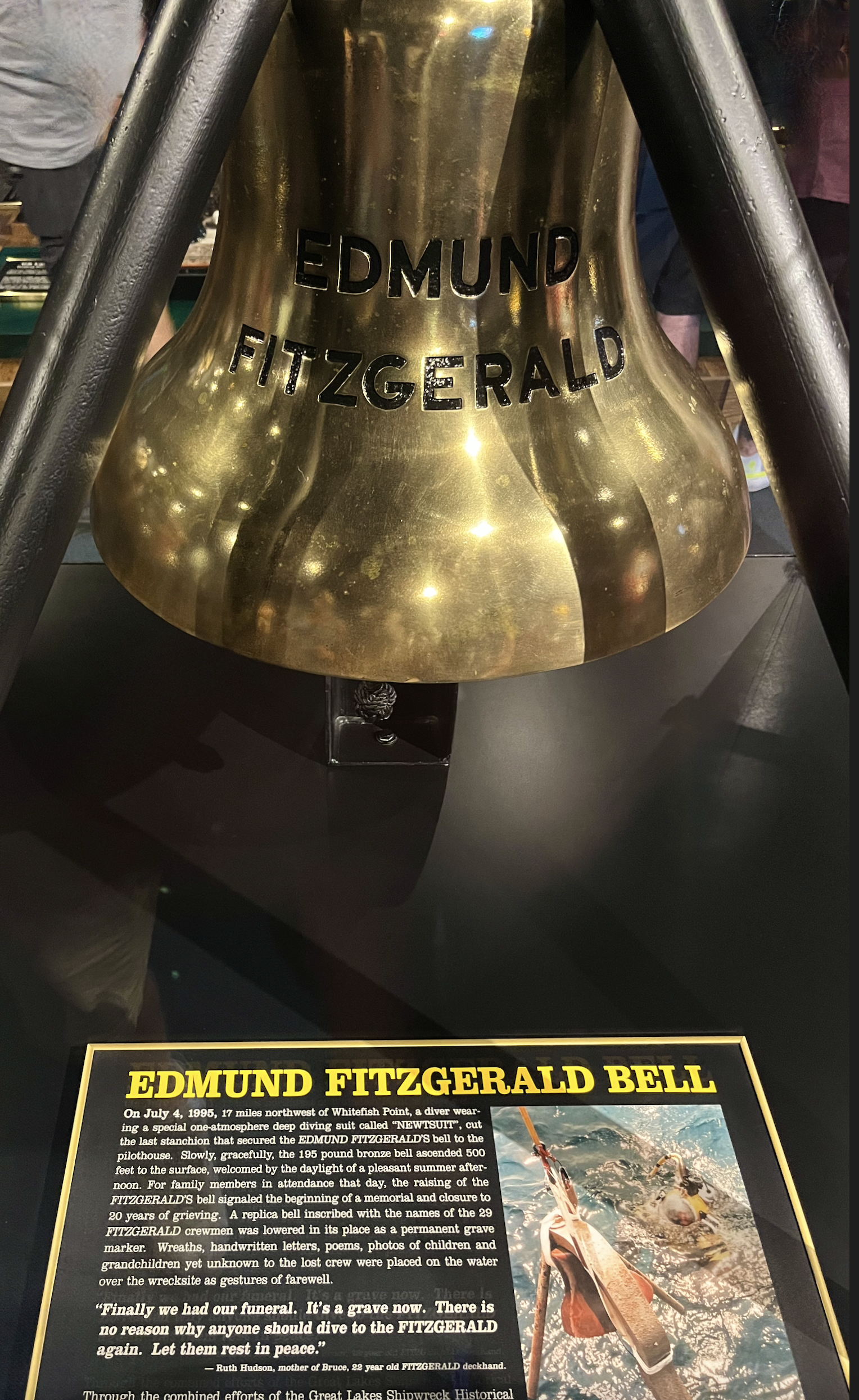
The Edmund Fitzgerald is probably the best known of the Great Lakes ships wrecks. The ship went missing on November 10, 1975 just 21 miles from Whitefish Point. It has been written about, studied, searched, and been the subject of countless theories. It’s most well known recounting is the haunting song from Gordon Lightfoot’s 1976 album Summertime Dream.
Our third highlight was the Soo Locks. Located in the city of Sault Ste. Marie, on the St. Mary’s River. Several locks operate in parallel, raising or lowering vessels between Lake Superior and Lake Huron.
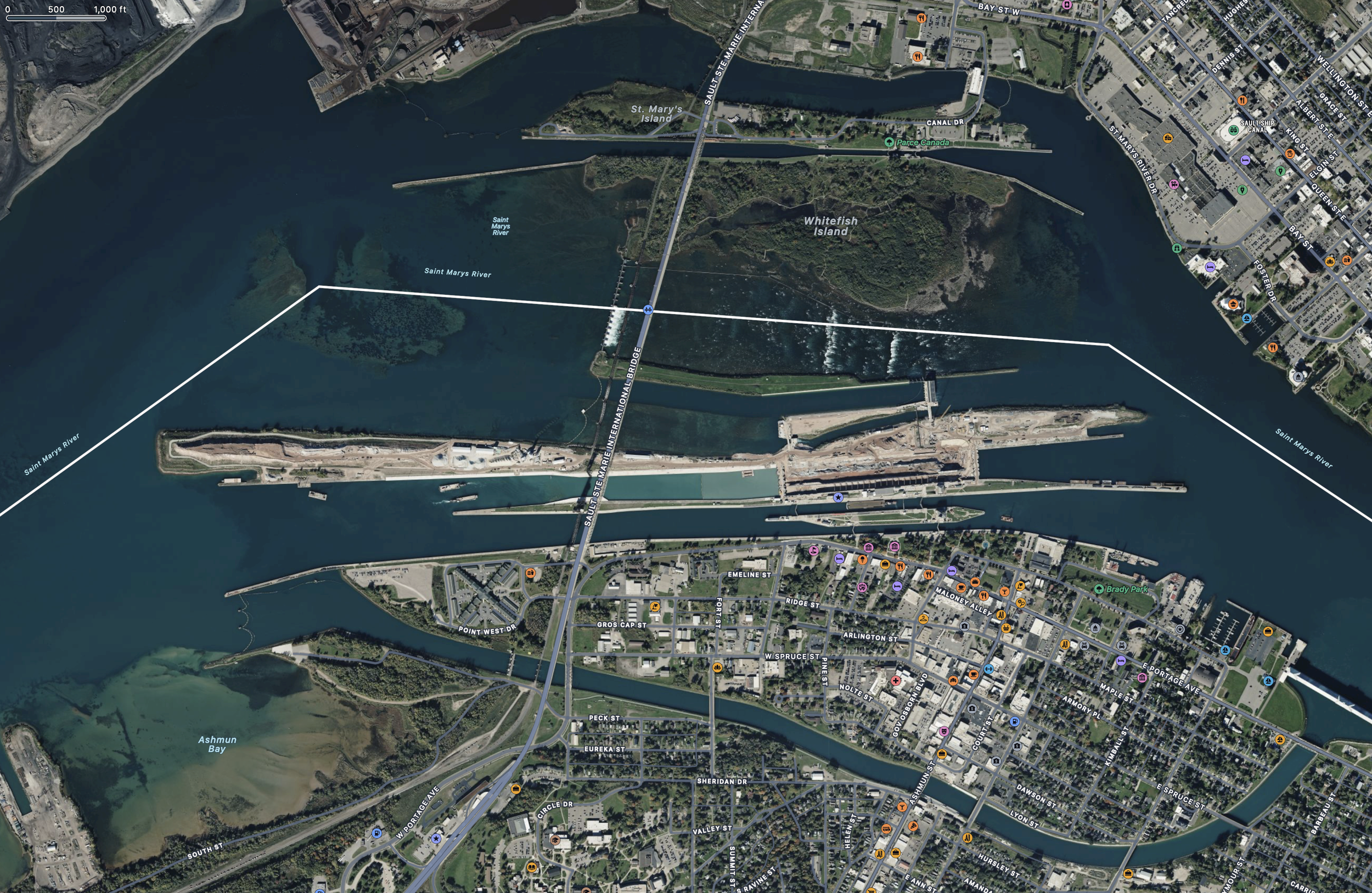
Around 10,000 vessels transit the Poe, MacArthur and Canadian Locks each year, carrying iron ore and grain. A new lock is under construction with expected completion around 2030. A section of the original rapids that used to span the river devided the U.S. and Candian locks. Hydroelectric plants also take advantage of the 21 foot elevation change.
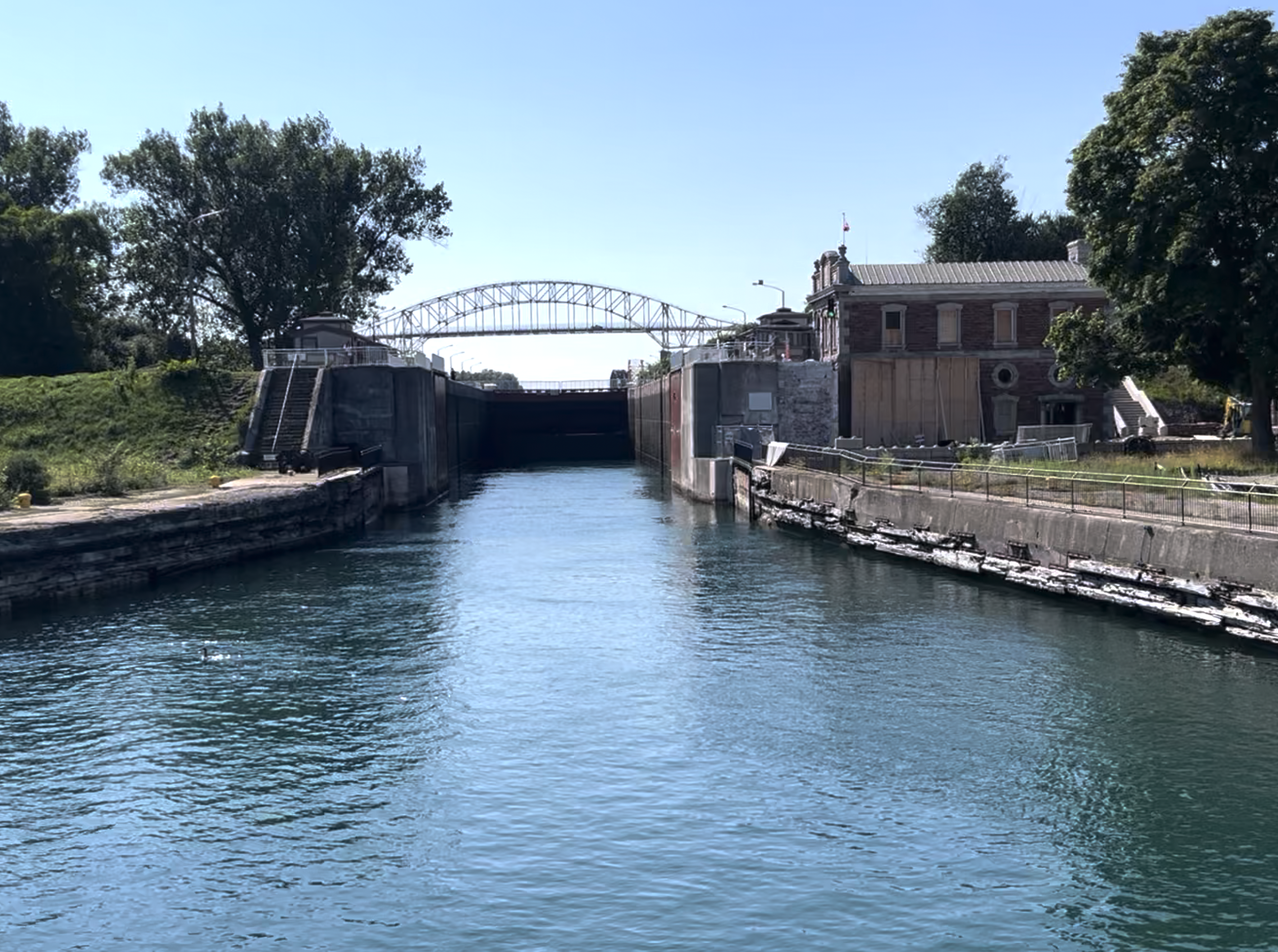
Lined up to enter the Canadian Lock. The best way to see this collection of civil engineering is by tour boat. Our toor took us up the Canadian locks, under the International Bridge, and back down the U.S. side.
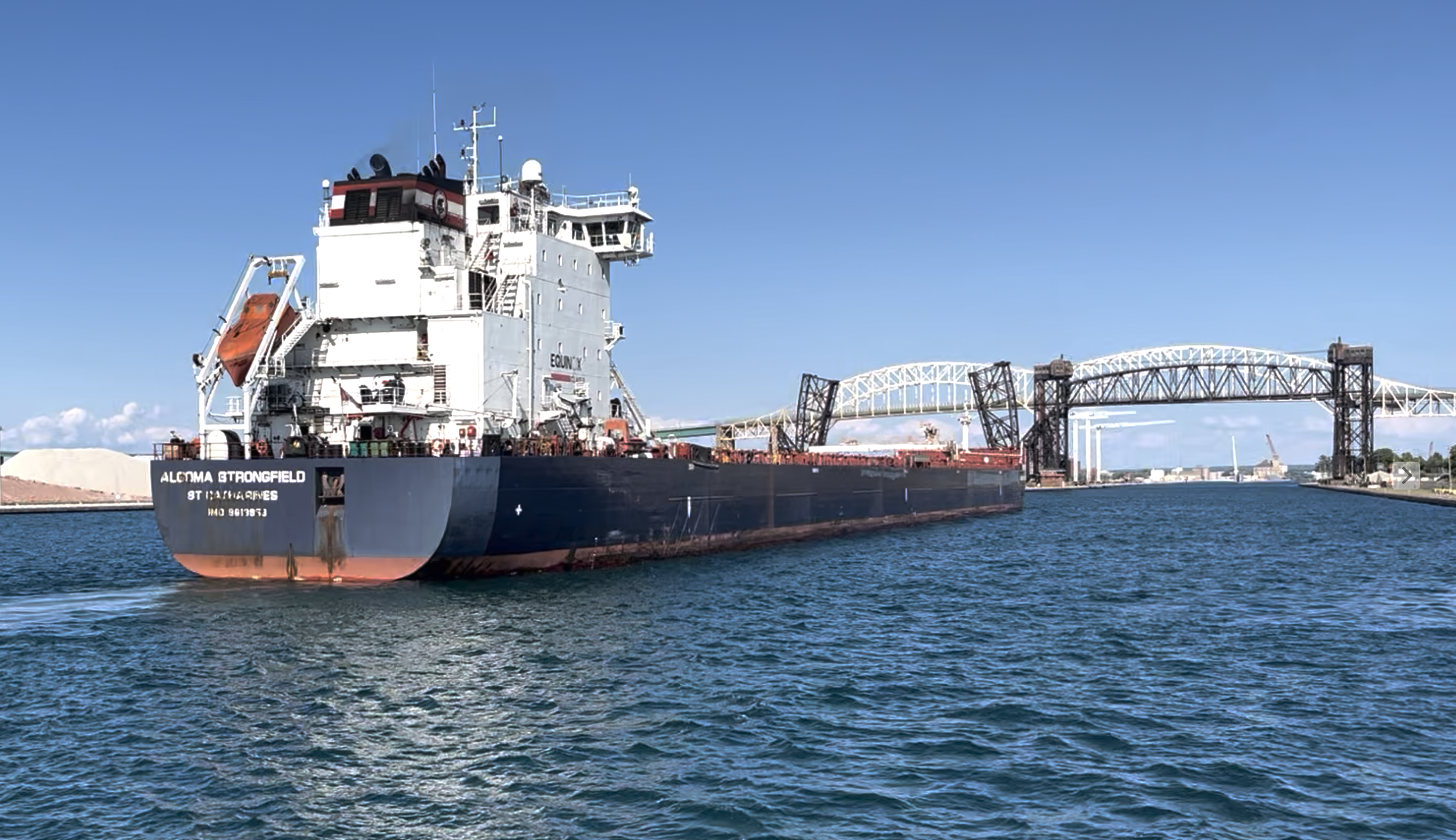
After rising to the level of Lake Superior, the tour boat crossed back to the U.S. side of the St. Marys River and followed a bulker in to the channel leading to the U.S. locks.
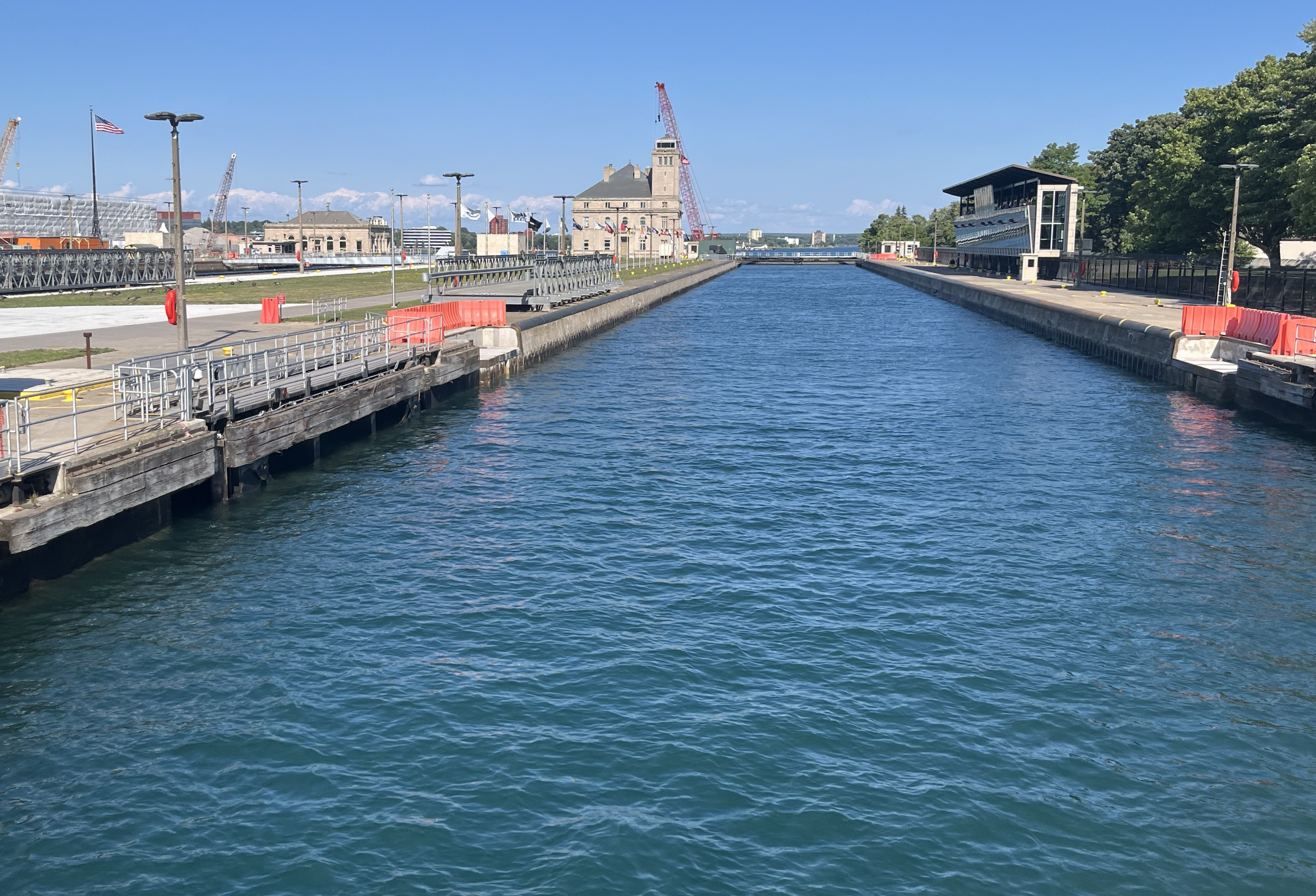
At the end of the channel, the bulker went left into the larger Poe Lock, and the tour boat went right into the MacArthur Lock. After entering the lock, the gates closed, blocking off water from Lake Superior. The water in the lock was drained out, lowering the water level 21 feet.
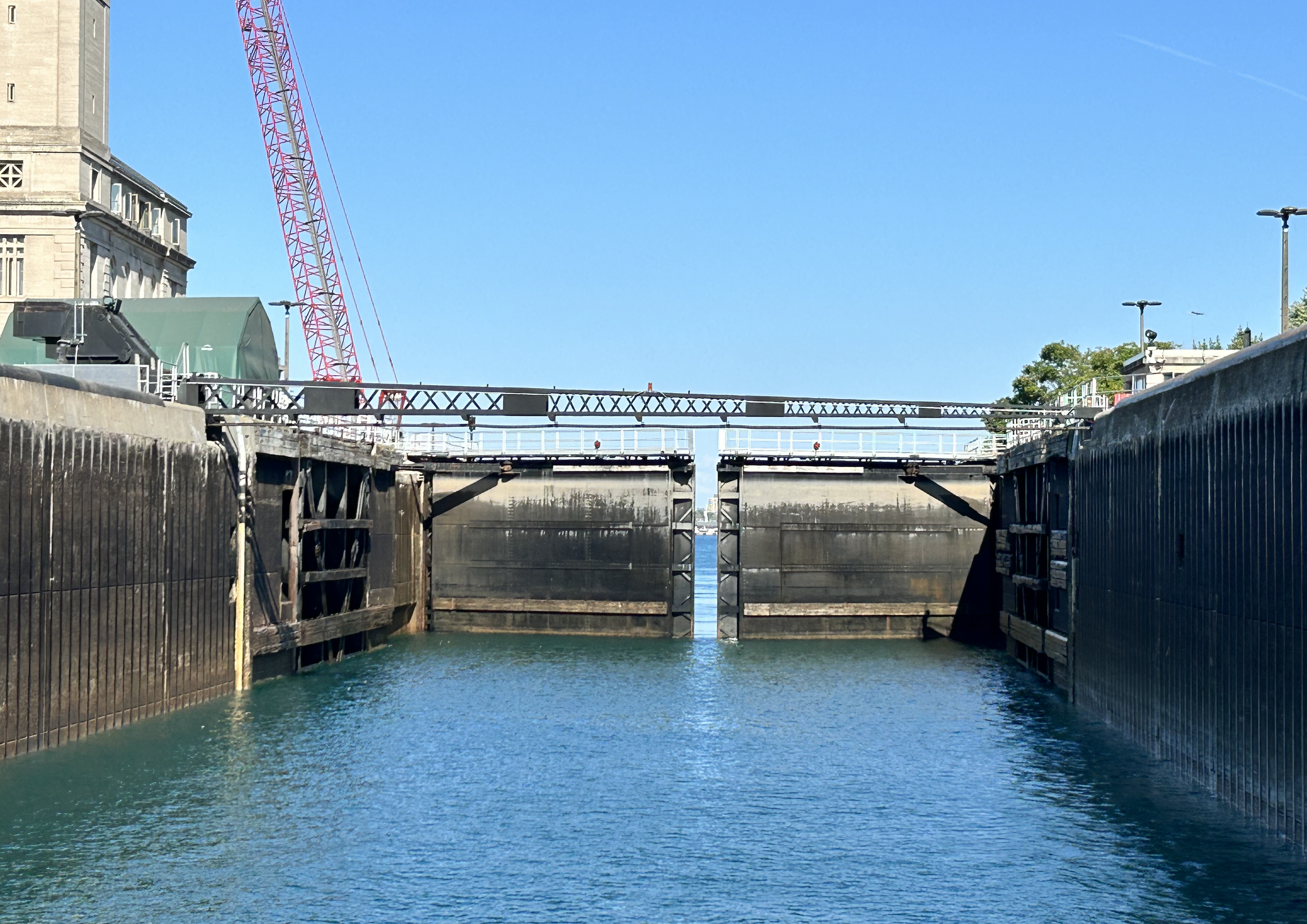
When the water level equalized with the Lake Huron side, the gates at the lower end of the locks opened and our tour boat motored out.
Our week away in the U.P. was as pleasant as one could hope for. The weather cooperated, the traffic was mild, and we enjoyed seeing and learning about a part of the country we’d neglected to visit. It is easy to see why folks retreat to their cabins on the Upper Peninsula for the summer season.
Thanks for reading to the end and don’t forget to buy my novels. Your support is greatly appreciated!